Full Transcript
Loading transcript…
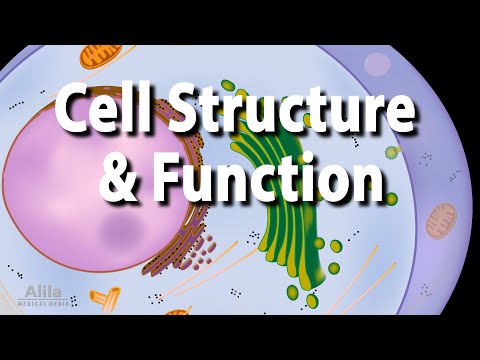
Students studying basic cell biology or preparing for exams in life sciences.
Cells are the basic unit of life; the plasma membrane controls substance traffic and communication.
Integral and peripheral proteins serve as receptors, channels, adhesion molecules, and enzymes.
Microvilli, cilia, and flagella are specialized extensions for absorption, movement, and propulsion.
The nucleus houses DNA, controls replication and transcription, and contains the nucleolus for ribosome assembly.
Rough ER synthesizes proteins; smooth ER makes lipids; Golgi modifies and packages them for transport.
Lysosomes digest macromolecules; mitochondria produce energy via cellular respiration.
Microfilaments, intermediate filaments, and microtubules provide structure, movement, and mitotic spindle formation.