youtube-transcript.ai

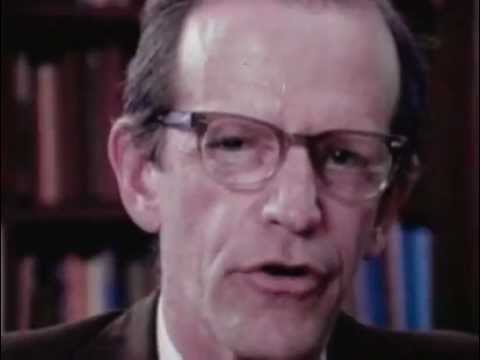
AT&T Archives: The Year They Discovered People

Watch with subtitles, summary & AI chat
Add the free Subkun extension — works directly on YouTube.
  • Watch
  • Subtitles
  • Summary
  • Ask AI
Try free →

Business students, HR professionals, and management leaders interested in the historical origins of organizational behavior and employee engagement strategies.

TL;DR

The Hawthorne studies of the 1920s revolutionized industrial management by proving that worker productivity is driven by social dynamics and psychological factors rather than just physical conditions. This landmark research shifted the focus from treating employees as mere machine extensions to recognizing them as vital components of a complex social system.

Key Takeaways

In This Video

  1. 00:00Reflecting on the Hawthorne Studies

    Former Hawthorne Works employees reunite to discuss their experiences participating in the landmark industrial experiments of the 1920s.

  2. 02:44The Roaring Twenties Industrial Context

    The 1920s brought rapid industrialization and mass production, often treating workers as mere extensions of machinery rather than individuals.

  3. 05:34Illumination Experiments and Puzzling Results

    Initial studies on lighting efficiency yielded unexpected results, as productivity increased regardless of whether lighting conditions improved or worsened.

  4. 06:54The Relay Room Scientific Inquiry

    Researchers launched a new study focusing on employee attitudes and social dynamics, leading to a significant 30 percent increase in relay production.

  5. 07:50Harvard Collaboration and Employee Interviews

    Western Electric partnered with Harvard researchers to conduct extensive employee interviews, uncovering the profound impact of social organization on workplace productivity.

  6. 09:58Defining Business as a Social System

    The studies concluded that businesses are social systems, emphasizing that worker satisfaction and group dynamics are essential to organizational success.

  7. 11:05The Legacy of Human-Centric Management

    Decades later, the Hawthorne studies continue to challenge businesses to balance production goals with the human needs of their workforce.

Questions & Answers

What were the Hawthorne studies?
The Hawthorne studies were a series of scientific inquiries conducted at Western Electric's Hawthorne Works starting in 1924. They investigated how factors like lighting, rest breaks, and employee attitudes influenced worker productivity, ultimately revealing that business organizations function as social systems.
When did the Hawthorne studies begin?
The Hawthorne studies began in 1924 at the Western Electric Hawthorne Works plant in Chicago.
What was the result of the illumination experiment?
The illumination experiment proved nothing conclusive. Output increased among employees being studied and those not being studied, and it even continued to rise when lighting levels were turned down, leading the National Academy of Science to call off the study.
What did the relay room experiment show?
The relay room experiment, which involved six women assembling electromagnetic switches, showed a 30 percent increase in production. It demonstrated that involving workers in routine changes and discussing the project with them significantly improved output and engagement.
What is the book Management and the Worker about?
Published by Bill Dickson and Fritz Roethlisberger, this book systematically documents the findings of the Hawthorne studies, establishing the perspective that a business organization should be viewed as a social system where worker satisfaction directly relates to productivity.

Key Terms

Download or copy the punctuated YouTube transcript (Markdown)

Full Transcript

Loading transcript…
Source

YouTube video. Original: https://www.youtube.com/watch?v=D3pDWt7GntI
Transcript captured and processed by youtube-transcript.ai on 2026-07-12.