Anyone interested in understanding the fundamental mechanics of modern currency creation and its economic implications.
TL;DR
This video reveals how currency is created through a system of IOUs, bonds, and fractional reserve lending, primarily driven by banks and the Federal Reserve. It explains how this process, often misunderstood, leads to the expansion of currency supply and contributes to economic inequality.
Questions & Answers
How is currency created by the government?
The government spends more than its income (deficit spending) and borrows by issuing bonds, which are essentially IOUs. The Federal Reserve then buys these bonds by creating new currency, effectively printing money.
What is a bond in the context of government finance?
A bond is a type of IOU issued by the Treasury to borrow money. It's a promise to pay back the borrowed amount plus interest over time, backed by future taxation.
How does the Federal Reserve create money?
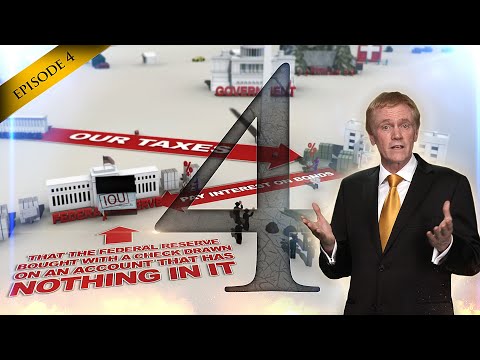
The Federal Reserve creates money by writing checks (which are also IOUs) to buy government bonds. These checks are drawn on an account with a zero balance, meaning new currency is brought into existence.
What is fractional reserve lending?
Fractional reserve lending is a banking practice where banks are only required to hold a fraction of customer deposits in reserve and can lend out the rest, creating new credit.
How do banks create money through loans?
When a bank issues a loan, it creates new deposit dollars in the borrower's account by adding numbers to its books in exchange for the borrower's IOU. This 'bank credit' is a form of currency.
What is the difference between money and currency?
Money is a store of value that maintains purchasing power, like gold or silver. Currency, like paper bills, is a claim check or IOU that represents a promise to pay, but doesn't inherently hold intrinsic value.
Key Terms
IOU — An 'I Owe You' is a document acknowledging a debt, used by governments and banks to represent borrowed money or credit.
Deficit Spending — Deficit spending occurs when a government spends more money than it collects in revenue, typically financed through borrowing.
Federal Reserve — The central bank of the United States, responsible for creating currency and managing monetary policy.
Fractional Reserve Lending — A banking system where banks hold only a fraction of customer deposits in reserve and lend out the remainder.
Download or copy the punctuated YouTube transcript (Markdown)