youtube-transcript.ai

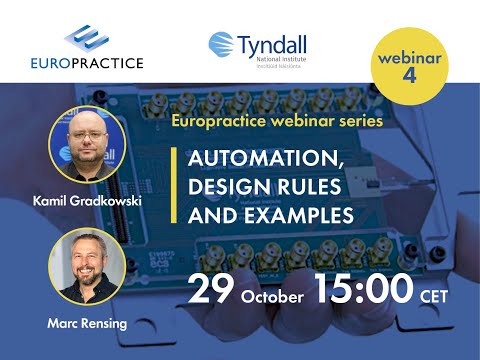
S11-E4_Automation, Design Rules and Examples

Watch with subtitles, summary & AI chat
Add the free Subkun extension — works directly on YouTube.
  • Watch
  • Subtitles
  • Summary
  • Ask AI
Try free →

This webinar focuses on the automation of photonic packaging, a process currently largely manual and time-consuming, to reduce costs and accelerate innovation. It explores the transition from manual to automated processes, the importance of design rules for standardization, and showcases examples of automated packaging for data center and medical applications.

Full Transcript

https://www.youtube.com/watch?v=4nPlugdcvP4

[00:03] Welcome to our final webinar uh in the series entitled introduction to platonics packaging and again I'm joined with my colleague Camila Bradkowski who today is going to be talking on the final topic of automation and design rules and also provide some examples then of photonix packages that we have developed within the photonics package group here at Tindle.
[00:22] Um this webinar will last about 30 minutes and again we've left time at the end then for questions and answers.
[00:31] So please feel free to use the Q&A to input any questions that you might have.
[00:36] So I'll hand over straight away to Camil to begin the presentation.
[00:40] Right.
[00:41] Hello everybody.
[00:44] Thanks for joining us again.
[00:47] Uh so after some feedback and some questions that I had accured over the last three weeks, I decided to focus more on the automation design side and the example side.
[00:54] Hope you're going to find it uh interesting.
[00:57] So the first question is of course a very simple one but why we want to go for automation uh and uh people who are
[01:05] for automation uh and uh people who are familiar with photonix packaging know.
[01:06] familiar with photonix packaging know that unlike electronics which is largely.
[01:08] very heavily automated photonix.
[01:10] very heavily automated photonix packaging right now is in many parts al still done by essentially by hand.
[01:14] packaging right now is in many parts al still done by essentially by hand.
[01:17] And uh if you're especially if you're dealing with things like prototypes, you'll know that photonix packaging is a very timeconuming process.
[01:19] uh if you're especially if you're dealing with things like prototypes,
[01:21] dealing with things like prototypes, you'll know that photonix packaging is a very timeconuming process.
[01:23] you'll know that photonix packaging is a very timeconuming process.
[01:25] This is due to the very high precision that we require to align the fibers to the chips.
[01:27] to the very high precision that we require to align the fibers to the chips.
[01:30] chips. Precision that can be of a single microns.
[01:32] microns. And if we have to align several uh tens sometimes even dozens of fibers to a single chip at the same time, it just takes time.
[01:35] uh tens sometimes even dozens of fibers.
[01:39] uh tens sometimes even dozens of fibers to a single chip at the same time, it just takes time.
[01:41] to a single chip at the same time, it just takes time.
[01:44] just takes time. And experienced person might require 3 hours.
[01:46] might require 3 hours. It might require less than 1 hour.
[01:47] It really depends on on the package. But it is a timeconuming process and uh as with all things time consuming the cost of that is very high and volumes are very low.
[01:50] on the package. But it is a timeconuming process and uh as with all things time consuming the cost of that is very high.
[01:53] process and uh as with all things time consuming the cost of that is very high and volumes are very low.
[01:56] consuming the cost of that is very high and volumes are very low. That's why photonix especially the four points of photonix is very high value proposition which is not very affordable on a larger.
[02:00] and volumes are very low. That's why photonix especially the four points of photonix is very high value proposition.
[02:02] photonix especially the four points of photonix is very high value proposition.
[02:04] photonix is very high value proposition which is not very affordable on a larger.
[02:07] which is not very affordable on a larger scale.
[02:09] So and also cost to market is quite prohibitive.
[02:11] Uh which is why you see all those pilot lines springing up.
[02:13] And I'll speak about that later.
[02:15] And also innovation if you come up with a new idea of a of a chip that you want to test then going from the idea to to a test just a tabletop demo that takes a lot of time and it costs a lot of money to do.
[02:23] Sometimes it can even take year or even more.
[02:31] Some with some packages we went through a two-year development cycle just to showcase a new technology.
[02:35] So this is a very timeconsuming process and very costly and therefore within packaging group one of our major limits is that we want to move towards automation of all our packages at some stage not perhaps at the very early prototyping stage but we need automation and of course that is to to drive down the cost of packaging and make them very affordable and uh and manufacturing with photonix packaging as you remember From my
[03:08] packaging as you remember From my previous webinars, I was saying that we
[03:10] previous webinars, I was saying that we can take uh we can take note of five
[03:13] can take uh we can take note of five decades of electronics packaging development and take many of the
[03:15] decades of electronics packaging development and take many of the packaging techniques and import them
[03:17] packaging techniques and import them directly to uh to photonics packaging,
[03:19] directly to uh to photonics packaging, use them in photonic packages.
[03:22] use them in photonic packages. The only thing that stands out really is the attachment of the fibers, but we're
[03:23] thing that stands out really is the attachment of the fibers, but we're working very hard on making that also
[03:25] attachment of the fibers, but we're working very hard on making that also quite scalable.
[03:27] working very hard on making that also quite scalable.
[03:30] quite scalable. And part of that process of scaling up is translation of the process.
[03:32] And part of that process of scaling up is translation of the process.
[03:35] is translation of the process. So on the right hand side you can see I'll switch
[03:38] right hand side you can see I'll switch to nas. So on right hand size you can
[03:40] to nas. So on right hand size you can see more or less the schematic of the
[03:43] see more or less the schematic of the manual process at which you package your
[03:45] manual process at which you package your chips with. So you you put everything
[03:49] chips with. So you you put everything into machine uh you grab your fiber rays
[03:52] into machine uh you grab your fiber rays with your uh with your gripper. You put
[03:56] with your uh with your gripper. You put your pick onto the stage and that's your
[03:58] your pick onto the stage and that's your preparation stage. Then you correct the
[04:01] preparation stage. Then you correct the angles between your uh fiber array and
[04:03] angles between your uh fiber array and your pick to make sure that they're
[04:05] your pick to make sure that they're aligned very well. Uh very critical
[04:09] aligned very well.
[04:09] Uh very critical step.
[04:11] You have to find the first light step.
[04:11] You have to find the first light otherwise you will not not have anything.
[04:13] otherwise you will not not have anything to optimize.
[04:16] After which you run through to optimize.
[04:16] After which you run through several uh uh renditions of position.
[04:19] several uh uh renditions of position optimization and any final angle.
[04:21] optimization and any final angle correction upon which after you found.
[04:23] correction upon which after you found your optimal position then you use.
[04:25] your optimal position then you use typically an optical adhesive to attach.
[04:28] typically an optical adhesive to attach your fiber array to the chip.
[04:31] And uh so your fiber array to the chip.
[04:31] And uh so this is how it looks like from the.
[04:33] this is how it looks like from the manual standpoint uh in broad sense but.
[04:37] manual standpoint uh in broad sense but uh you need to translate that process.
[04:39] uh you need to translate that process into an automated proc in into an.
[04:41] into an automated proc in into an automated one.
[04:43] automated one. And on the left hand this is like a a block diagram of uh uh of an.
[04:48] is like a a block diagram of uh uh of an automated process.
[04:50] And if you trace these steps there the these can broadly.
[04:52] these steps there the these can broadly be put into categories uh within this.
[04:55] be put into categories uh within this process.
[04:57] So some steps require several iterations and so on.
[04:59] iterations and so on. But the translation from one to the other is a.
[05:01] translation from one to the other is a critical step and you need to be.
[05:03] critical step and you need to be familiar typically with the manual step.
[05:06] familiar typically with the manual step before you can go to automation because.
[05:08] before you can go to automation because you need to know what happens during
[05:10] you need to know what happens during each uh uh manual step in order to properly translate it.
[05:15] properly translate it.
[05:17] And automated packaging machines are very similar just the manual machines.
[05:19] very similar just the manual machines.
[05:21] Here is an example of a machine we have in our lab from Fanton Tech.
[05:24] And uh if you compare it to a manual machine from any company that they look uh very similar.
[05:30] similar.
[05:33] Uh ours has two alignment arms and at least three cameras.
[05:35] Originally had four.
[05:39] Uh one was removed in uh for for uh for space reasons.
[05:42] And there's also a package holder here in the middle that holds the holds the chip that needs to be packaged.
[05:46] And each of the alignment arms has a sixaxis stage of course because we need not only position but also angular alignment.
[05:53] There's set of grippers to hold the fiber array.
[05:57] There's an epoxy dispenser as well for automated uh uh epoxy deposition.
[06:02] But critically there is a stage camera and this allows for determining the orientation of the grippers in space because there's direct registry uh
[06:11] because there's direct registry uh between what the camera sees and the position of the camera and the position of the of the grippers.
[06:18] It's actually it can be hardcoded into the into the software.
[06:22] However, we can see that this camera is uh indispensable in actually uh getting the the bearing so that the machine knows uh the position of the package relative to the position of the grippers and uh if the machine can't see it, it h you won't be able to perform uh any sort of these advanced automated packaging steps.
[06:45] Alignment markers uh are also quite critical for the packaging uh process.
[06:50] their their position typically on the chip and they have to have several key features.
[06:55] So they have to be of sufficient size so that you can actually see them with a camera.
[06:59] If they're too small uh for you know for the effective pixel size to see then you won't be able to to register them properly.
[07:08] They have to have high contrast.
[07:10] Uh they have to stand out from the background.
[07:10] Typically
[07:11] stand out from the background.
[07:13] Typically it's done very easily by just putting a it's done very easily by just putting a metal layer on the chip that that gives you high enough uh high enough reflection and contrast.
[07:19] You have to be characteristic. That means indistinguishable distinguishable from anywhere anything else on the chip.
[07:24] Otherwise, you know, the the machine can be confused that actually what set of element markers does it see.
[07:31] And um it also has to be uh able to the machine has to be able to filter it against the background noise.
[07:38] Uh and the distance between the markers essentially determines the accuracy of the of the measurement of the position on the orientation of your chip.
[07:46] And you need at least three of those to establish the orientation of the pick relative to the machine.
[07:49] If you have just two, your accuracy is not that great.
[07:54] And uh as for the shape, they can be essentially anything.
[07:59] Uh but most typically you'll find squares, crosses, circles or combinations of they can be positive to negative.
[08:06] Uh it really uh it really it really doesn't matter that much. So here's an example of actually uh there
[08:12] here's an example of actually uh there will be series of videos on which I will.
[08:14] will be series of videos on which I will be showing the examples of actually how.
[08:17] be showing the examples of actually how the machine in our lab recognizes the.
[08:19] the machine in our lab recognizes the photonic uh circuit position and.
[08:21] photonic uh circuit position and orientation how it aligns the fiber.
[08:23] orientation how it aligns the fiber array to it.
[08:26] So let me run this out. So here you can see a reference chip on.
[08:28] here you can see a reference chip on which we uh find figure out the X Y and.
[08:31] which we uh find figure out the X Y and Z orient position as well as orientation.
[08:34] of of the chip using these sets of.
[08:37] squares which are registered against the.
[08:40] uh uh the coupters the edge couplers.
[08:43] which are on the on this chip. So we uh.
[08:46] look for sets of them in each of the.
[08:49] corners and once we uh find them all we.
[08:53] can actually calculate the position of.
[08:55] each of the edge couplers which are.
[08:59] which are present on the chip as well as.
[09:00] determine the orientation of the.
[09:02] photonic integrated circuit relative to.
[09:04] the to the uh angle of the fiber array.
[09:09] This is done in a series of steps.
[09:12] similar to before. First, as you can see.
[09:14] similar to before.
[09:14] First, as you can see over here, the machine is determining over here, the machine is determining the uh orientation of the fiber array the uh orientation of the fiber array using the corners of it.
[09:24] First, there's a camera which is outside of the field of view on the right and looks from the of view on the right and looks from the bottom.
[09:29] This is to show the orientation in the uh this is the yaw angle.
[09:31] And then the angle shifts uh to looking from the side to determine the pitch of the then the angle shifts uh to looking from the side to determine the pitch of the fiber array relative to the chip.
[09:44] Then we also can find the y of the chip.
[09:46] But afterwards after all the angles are afterwards after all the angles are corrected since uh you the machine knows the position of the edge coupers relative to the position the grippers now it can very uh safely approach the uh the chip with the fiber array and uh continue the process from there.
[09:58] Here is a little bit more of advanced machine again by Fonte on which you can see a a process which is a little bit different but still shows some features of a uh of
[10:17] but still shows some features of a uh of automated packaging process.
[10:19] In this automated packaging process.
[10:22] In this case where this is purely electric electronic based process uh in which we pick up the glass imposer and move it onto a soldering station.
[10:26] Uh you can see here there is a lens from the bottom through which the the laser is going to uh actually be uh shown onto the chip.
[10:39] So first uh the bondpad positions after putting them on the reflow stage are uh are identified to to to show to so that machine knows their orientation and and position space.
[10:52] Then you pick up your certain part to be soldered using the same pickup tool which you picked up your glass deposer.
[11:03] This is done very gently using vacuum.
[11:05] Then it's deposited onto like a a holder stage so that the real tool can be uh uh uh can be brought into.
[11:13] So this tool actually has a window through which the laser is
[11:17] has a window through which the laser is going to be shown.
[11:19] This is a very special tool that uses combination of uh vacuum.
[11:22] It's essentially vacuum pickup tool.
[11:24] Again the machine uh picks up some uh uh orientation markers.
[11:29] In this case, the uh it looks for specific bunk paths in order to orient them properly with the uh with the substrate below.
[11:32] Then of course it measures the pitch and roll of the uh piece in order to match it to the to the interposer.
[11:35] And then once parts once both parts are brought together for bonding laser is shown through for a few seconds and uh the temperature reaches the reflow conditions in just you know very quickly.
[11:38] So it was a second or two uh and afterwards the part is released.
[11:43] So this is an example let's say of a more electronic based uh automated packaging process and afterwards the the package can go to can move on to a um let's say
[12:21] can go to can move on to a um let's say for fiber alignment and attachment.
[12:22] So for fiber alignment and attachment.
[12:22] So we can see the automation in this case.
[12:25] we can see the automation in this case looks more advanced because this is like the micro electronics based process.
[12:28] the micro electronics based process which is uh takes from the legacy that that we've built upon for for several decades.
[12:33] and then you take this part and you put it in a different machine for an automated uh uh fiber attachment for example.
[12:40] So you cannot perform any sort of you cannot start thinking about any sort of automation until your package conforms to some sort of standards and we call those typically design rules.
[12:49] Um so here's an example of a package uh which was very we encountered very early like about perhaps 10 years ago uh that whereabouts which required very specific conditions to be you know to be packaged.
[13:05] So you can see uh there's a lot of things wrong with this photonic integrated circuit.
[13:09] Uh uh one's stark features that it's kind of rotated and that's because the uh wavegu leaves at an angle here.
[13:17] So in order to conform with the package definition, we had to actually approach
[13:22] definition, we had to actually approach it uh with a lensed fiber that was coming normal to the package.
[13:27] So we had to rotate the pick itself to conform to that angle.
[13:30] So that's one thing.
[13:32] Second thing, the bond pads for electrical integration are essentially all over the place.
[13:37] Uh typically what you'll find now is that they're positioned at the edges for easy wire bonding or other sorts of integration.
[13:44] In this case, it was uh we had to move even some of the bond parts through uh some very uh uh warehouse like a very uh uh.
[13:59] the interposers were essentially made in house.
[14:01] And in this case, if we try to take this package and put it into the automated process, it would be impossible.
[14:07] And uh even if possible it would be require a very specific machine machine would be built exactly just for this process.
[14:17] So uh what we advocate here is to conform to standard some
[14:23] here is to conform to standard some standard design rules so that your uh uh standard design rules so that your uh uh device even if it's an early stage of device even if it's an early stage of development can conform to those rules.
[14:30] development can conform to those rules and therefore it can be moved through and therefore it can be moved through the uh scaling up pipeline much faster.
[14:37] the uh scaling up pipeline much faster.
[14:39] And those design rules are quite uh quite simple.
[14:41] Here's an extract from the book.
[14:44] There's several design rules and uh each uh packaging house or each uh uh pilot line will have their own set of design rules, but they're generally quite similar.
[14:47] uh each uh packaging house or each uh uh pilot line will have their own set of design rules, but they're generally quite similar.
[14:49] design rules, but they're generally quite similar.
[14:51] For example, you quite similar.
[14:53] For example, you shouldn't put uh your your optical and electric connections in such a configuration that they can interfere with one one another.
[14:57] shouldn't put uh your your optical and electric connections in such a configuration that they can interfere with one one another.
[14:58] configuration that they can interfere with one one another.
[15:00] For example, uh uh having your uh fiber connections very close to the electrical connections to interfere with bond pads, for example, or having north north and west uh uh for optical connections and your other parts for your electrical connections.
[15:05] with one one another.
[15:09] having your uh fiber connections very close to the electrical connections to interfere with bond pads, for example, or having north north and west uh uh for optical connections and your other parts for your electrical connections.
[15:11] close to the electrical connections to interfere with bond pads, for example,
[15:13] interfere with bond pads, for example, or having north north and west uh uh for optical connections and your other parts for your electrical connections.
[15:17] or having north north and west uh uh for optical connections and your other parts for your electrical connections.
[15:19] optical connections and your other parts for your electrical connections.
[15:21] for your electrical connections. This is typically not very good design.
[15:23] This is typically not very good design. Also, intermixing them as you can see here so
[15:25] intermixing them as you can see here so that all your optical connections are on
[15:28] that all your optical connections are on one side of the chip.
[15:31] one side of the chip. uh typically what we advocate for is a clear separation of
[15:34] we advocate for is a clear separation of domains.
[15:37] domains. One direction is for optical channels.
[15:38] channels. The other direction is for electrical channels with additional
[15:40] electrical channels with additional separation between DC and RF.
[15:43] separation between DC and RF. This is of course not always possible.
[15:44] course not always possible. Sometimes you have to mix uh your bond pads DC and
[15:47] you have to mix uh your bond pads DC and RF.
[15:49] RF. But uh such a configuration gives a very clear uh it's a very clear method
[15:54] very clear uh it's a very clear method to store that leads towards
[15:55] to store that leads towards standardization and ease of packaging.
[15:59] standardization and ease of packaging.
[16:02] And then then once those uh design rules are essentially built, they can be the
[16:04] are essentially built, they can be the reason why they're so important is that
[16:06] reason why they're so important is that they can be incorporated into a other
[16:08] they can be incorporated into a other piece of software which are used by chip
[16:10] piece of software which are used by chip designers for designing chips.
[16:13] designers for designing chips. So once once they're incorporated into uh
[16:16] once they're incorporated into uh software such as uh what's this software?
[16:19] software? I'm not entirely familiar with the software name.
[16:20] the software name. But once you um once you use the software to uh to
[16:29] once you use the software to uh to uh to design your pick, then you can run uh to design your pick, then you can run a check against the packaging design.
[16:33] a check against the packaging design rules and it can tell you that for example your bond pads are too close or they're not or they're not positioned correctly relative to other parts of the uh of of the chip.
[16:38] they're not or they're not positioned correctly relative to other parts of the uh of of the chip.
[16:41] correctly relative to other parts of the uh of of the chip. They're too for example too close to the edge, too far from the edge or they're kind of intermixed.
[16:43] They're too for example too close to the edge, too far from the edge or they're kind of intermixed.
[16:47] from the edge or they're kind of intermixed.
[16:49] intermixed. So the packaging design check uh it can be invaluable tool for pig designers as well.
[16:52] check uh it can be invaluable tool for pig designers as well.
[16:57] and uh the way we those design rules are defined are something using something called reference chips.
[16:59] and uh the way we those design rules are defined are something using something called reference chips.
[17:02] defined are something using something called reference chips.
[17:05] called reference chips. So each reference chips essentially is a simplified version of a photonic integrated circuit in that it contains only the relevant interfaces.
[17:06] reference chips essentially is a simplified version of a photonic integrated circuit in that it contains only the relevant interfaces.
[17:09] integrated circuit in that it contains only the relevant interfaces.
[17:10] only the relevant interfaces. So uh it doesn't contain really any active parts in the sense that there you know that its purpose is not to really to be a working device. It's purpose is to be a packaging uh packaging test vehicle.
[17:13] So uh it doesn't contain really any active parts in the sense that there you know that its purpose is not to really to be a working device. It's purpose is to be a packaging uh packaging test vehicle.
[17:16] active parts in the sense that there you know that its purpose is not to really to be a working device. It's purpose is to be a packaging uh packaging test vehicle.
[17:19] know that its purpose is not to really to be a working device. It's purpose is to be a packaging uh packaging test vehicle.
[17:22] to be a working device. It's purpose is to be a packaging uh packaging test vehicle.
[17:24] to be a packaging uh packaging test vehicle.
[17:27] So they would contain things
[17:30] vehicle.
[17:32] So they would contain things like couplers, waveguides, DC narf bond pads, heaters, everything necessary just to test out your packaging techniques.
[17:36] And this is one of the examples on which you can see that we have here a series of edge coupters, rows of grating coupters, DC and RF bond pads separated north and south.
[17:49] We have some uh placements for electrical flip chip uh testing as well as heaters for uh uh for thermal management testing and this allows for development not only of uh your packaging process but also for development of packaging equipment.
[18:04] And the reference picks have this advantage that they're quite simple to make.
[18:11] They don't they can be much more simple to make and you can get them from the single wafer by tens dozens or even hundreds.
[18:17] So there could be quite an easy way to test some uh of the packaging techniques that that that will be that will be relevant for for the device for the system.
[18:26] And you can even combine different types of your reference chips to have to get what's
[18:31] reference chips to have to get what's called reference devices like which you called reference devices like which you can use to simulate uh the entire systems as a whole how they behave.
[18:39] electrical wise, optical wise and uh RF wise as well as thermal wise.
[18:45] So here is a just a very quick sketch of which we can see we're combining a reference pick which is the uh the the optical part a an RF RF pick which would simulate for example your your controller and the thermal EIC which would be like a simulation of your uh of the thermal uh aspect.
[19:05] So how much heat is generated within the enclosure of the device and combining those reference chips together you can actually simulate the packaging process as well as the general behavior of your device uh packaging wise.
[19:19] So this is uh this is quite uh quite critical for developing of uh packaging techniques and then from those you can actually develop those specific single packaging techniques.
[19:30] So you can create
[19:32] packaging techniques.
[19:32] So you can create a menu of uh that you can offer to uh a menu of uh that you can offer to uh you know to uh to your clients.
[19:38] So for example flip chip of a single die is one example flip chip of a single die is one packaging technique that you develop using those reference picks.
[19:42] Then you can move from a single die to wafer level integration from control of a package.
[19:48] You can actually show how your package behaves you know when a specific load is applied to it.
[19:53] uh flip chipping high speed pick and place another technique that's that's essentially a legacy of uh of a of micro electronics.
[20:03] you can showcase uh you know how you deal with wire bonding from both DC and RF u uh aspect.
[20:13] then you can also introduce other items to your menu for example uh interposer integration for example this is a quite sophisticated uh package which contains a fiber ray going ret triplex chip interoser into the indium phospite chip.
[20:31] You can also add to to the menu uh
[20:34] You can also add to to the menu uh lasers uh sorry lenses which are written
[20:36] lasers uh sorry lenses which are written directly for onto lasers for integration
[20:39] directly for onto lasers for integration onto waveguides. You can write lenses on
[20:42] onto waveguides. You can write lenses on onto your waveguides. Sorry. Yeah. Onto
[20:45] onto your waveguides. Sorry. Yeah. Onto waveguides to couple to to fibers and uh
[20:49] waveguides to couple to to fibers and uh other standard packaging process. For
[20:51] other standard packaging process. For example, of course uh integrate
[20:53] example, of course uh integrate attachment of fiber array to the chip
[20:55] attachment of fiber array to the chip from both the edge and grating copper
[20:57] from both the edge and grating copper side. And once you do that you can
[21:00] side. And once you do that you can essentially combine them into what's
[21:02] essentially combine them into what's called the technology demonstrators. So
[21:04] called the technology demonstrators. So these combine all the technology and
[21:06] these combine all the technology and techniques and elements that can be
[21:08] techniques and elements that can be found in majority of packages in the
[21:11] found in majority of packages in the most generic terms. So for example here
[21:13] most generic terms. So for example here we have a a uh TX uh uh transceiver
[21:18] we have a a uh TX uh uh transceiver sorry which has hybrid laser
[21:20] sorry which has hybrid laser integration, electronic integration,
[21:22] integration, electronic integration, microtic integration, DC and RF uh wire
[21:25] microtic integration, DC and RF uh wire bonding. And this is just a vehicle to
[21:27] bonding. And this is just a vehicle to demonstrate the technology even though
[21:28] demonstrate the technology even though this is actually working device. And
[21:31] this is actually working device. And yeah this so this is just a listing of
[21:33] yeah this so this is just a listing of all the techniques that are used for uh
[21:35] all the techniques that are used for uh for demo for demonstration of this
[21:37] for demo for demonstration of this specific technology. While the chip
[21:39] specific technology. While the chip itself is a is a working device, this is
[21:42] itself is a is a working device, this is actually a device to highlight the
[21:44] actually a device to highlight the capabilities of packaging. What can be
[21:46] capabilities of packaging. What can be done using packaging techniques as they
[21:48] done using packaging techniques as they currently are
[21:51] currently are and your practice of course also has a
[21:54] and your practice of course also has a set of standardized uh integration
[21:57] set of standardized uh integration services that that you can take
[21:58] services that that you can take advantage of. So uh you can take
[22:02] advantage of. So uh you can take advantage of advanced platonic
[22:03] advantage of advanced platonic packaging. You can have fan out sorry uh
[22:07] packaging. You can have fan out sorry uh fan out wafer level packaging using
[22:09] fan out wafer level packaging using interposers. You can have prepackaging
[22:10] interposers. You can have prepackaging wafer level services and even
[22:12] wafer level services and even micrfluidic system integration. And uh
[22:15] micrfluidic system integration. And uh for the full list uh you could go to to
[22:18] for the full list uh you could go to to this site to to see what uh what sort of
[22:20] this site to to see what uh what sort of services can you avail from your
[22:21] services can you avail from your practice. And we also have in the neural
[22:24] practice. And we also have in the neural practice some standardized uh packages
[22:27] practice some standardized uh packages that you as long as your pick which is
[22:29] that you as long as your pick which is the center over here. Oh, sorry my mouse
[22:32] the center over here. Oh, sorry my mouse keeps moving. uh as long as it uh is uh
[22:36] keeps moving. uh as long as it uh is uh designed to uh to this to the standard
[22:41] designed to uh to this to the standard uh that's uh that's defined from
[22:42] uh that's uh that's defined from Europractice design rules, you can have
[22:45] Europractice design rules, you can have a very easy you can get an very easy way
[22:48] a very easy you can get an very easy way to package your device because we have
[22:50] to package your device because we have standardized uh PCBs, heat spreaders,
[22:53] standardized uh PCBs, heat spreaders, stacks bases and as long as the pick is
[22:56] stacks bases and as long as the pick is well designed to confront to these, this
[22:58] well designed to confront to these, this is a very easy way to you know to have
[23:00] is a very easy way to you know to have your chip packaged uh at relative
[23:02] your chip packaged uh at relative atively low cost and you can do that for
[23:04] atively low cost and you can do that for both grating and edge cutting designs.
[23:08] both grating and edge cutting designs. However, the future of packaging is a
[23:10] However, the future of packaging is a little bit different the way is the way
[23:12] little bit different the way is the way that we see it. Uh because all the all
[23:15] that we see it. Uh because all the all the processes that that you see that uh
[23:18] the processes that that you see that uh that I highlighted here even out even
[23:20] that I highlighted here even out even automated especially as part of the
[23:22] automated especially as part of the photonix integration. So attachment
[23:24] photonix integration. So attachment libraries those are serial processes.
[23:27] libraries those are serial processes. They're basically done package by
[23:28] They're basically done package by package which is which means that even
[23:31] package which is which means that even automation can only give us a there's a
[23:35] automation can only give us a there's a limit at how much uh you know uh scaling
[23:38] limit at how much uh you know uh scaling up to volume can that give us in the
[23:40] up to volume can that give us in the serial process. This is uh the limit is
[23:44] serial process. This is uh the limit is uh uh quite quite low. So in the future
[23:48] uh uh quite quite low. So in the future what we're looking towards is making uh
[23:51] what we're looking towards is making uh packaging process not uh serial how but
[23:54] packaging process not uh serial how but parallel. So the basic idea here is to
[23:57] parallel. So the basic idea here is to use the chiplet model that's becoming
[23:59] use the chiplet model that's becoming very popular on which you have
[24:01] very popular on which you have essentially an electrical and thermal
[24:04] essentially an electrical and thermal interposer
[24:05] interposer uh essentially a wafer of uh of
[24:08] uh essentially a wafer of uh of interposers. Here you can see each tile
[24:09] interposers. Here you can see each tile is its own interposer and on each of
[24:12] is its own interposer and on each of those you integrate all your electrical
[24:14] those you integrate all your electrical and optical components. So your EIC's,
[24:16] and optical components. So your EIC's, your PCs and all the components
[24:18] your PCs and all the components necessary for a working device. And once
[24:20] necessary for a working device. And once that is done uh once the assembly
[24:23] that is done uh once the assembly process is done in a parallel manner,
[24:25] process is done in a parallel manner, then you can uh optically test it and
[24:27] then you can uh optically test it and actually test it on the same wafer
[24:29] actually test it on the same wafer before you dice out your uh your device.
[24:32] before you dice out your uh your device. So this is a very easy way to
[24:34] So this is a very easy way to parallelize the packaging process and
[24:36] parallelize the packaging process and scale it up to actually quite high
[24:38] scale it up to actually quite high volumes. And what you can think about is
[24:39] volumes. And what you can think about is also that we can uh use the u uh what's
[24:43] also that we can uh use the u uh what's called the multi-RO packaging runs as
[24:45] called the multi-RO packaging runs as where each perhaps not each but there
[24:48] where each perhaps not each but there can be several series of tiles which
[24:50] can be several series of tiles which have different designs from different
[24:53] have different designs from different customers or you know or different uh
[24:55] customers or you know or different uh different iterations so that you can
[24:57] different iterations so that you can just uh you know pay you just for for
[25:00] just uh you know pay you just for for your part and have just a part of the
[25:02] your part and have just a part of the wafer uh packaged. And this is the way
[25:05] wafer uh packaged. And this is the way that we see uh to actually scale up to
[25:08] that we see uh to actually scale up to very high volumes which would be quite
[25:10] very high volumes which would be quite necessary if uh if when the AI you know
[25:14] necessary if uh if when the AI you know becomes even more know when photonic
[25:17] becomes even more know when photonic devices become much more ubiquitous in
[25:20] devices become much more ubiquitous in applications such as AI which is a
[25:22] applications such as AI which is a current uh very high you know very high
[25:24] current uh very high you know very high visibility uh um
[25:27] visibility uh um requirement
[25:29] requirement and uh as I mentioned yes you can this
[25:31] and uh as I mentioned yes you can this can only be done if if everything here
[25:34] can only be done if if everything here is standardized. So uh all the not only
[25:37] is standardized. So uh all the not only the parts but also processes are
[25:39] the parts but also processes are standardized. Only then we can move on
[25:41] standardized. Only then we can move on through to steps from just a single you
[25:45] through to steps from just a single you know package by package process to
[25:47] know package by package process to automated uh process and then scalable
[25:50] automated uh process and then scalable parallel uh uh photonic device assembly.
[25:55] parallel uh uh photonic device assembly. Are we on time? Perfect. So uh takeaway
[25:59] Are we on time? Perfect. So uh takeaway message from from this part is
[26:00] message from from this part is essentially uh that of course we need
[26:03] essentially uh that of course we need automation that's essentially that's the
[26:06] automation that's essentially that's the only way that we can make it um
[26:07] only way that we can make it um affordable not only for you know for the
[26:09] affordable not only for you know for the big players but also formemes
[26:12] big players but also formemes and u in order to get there uh you need
[26:15] and u in order to get there uh you need to know how how it is done from the
[26:18] to know how how it is done from the manual perspective because you need to
[26:21] manual perspective because you need to then be able to translate it to an
[26:22] then be able to translate it to an automated process and uh uh for
[26:25] automated process and uh uh for automation possible, you need to follow
[26:27] automation possible, you need to follow a set of design rules which are codified
[26:29] a set of design rules which are codified in what we call assembly design kits or
[26:32] in what we call assembly design kits or ADKs which is the essentially the the
[26:35] ADKs which is the essentially the the design rule package for for packaging
[26:38] design rule package for for packaging and uh the packaging processes and the
[26:42] and uh the packaging processes and the equipment then can be developed uh to
[26:44] equipment then can be developed uh to follow those design rules using quite
[26:46] follow those design rules using quite cheap reference picks and once that is
[26:48] cheap reference picks and once that is done then you can move on to more device
[26:52] done then you can move on to more device centered approach where you combine
[26:54] centered approach where you combine several uh of your reference devices
[26:55] several uh of your reference devices device picks to to have reference
[26:57] device picks to to have reference devices and showcase your packaging
[27:00] devices and showcase your packaging technologies that that that you can that
[27:02] technologies that that that you can that you can provide and finally the
[27:04] you can provide and finally the technology demonstrators are the final
[27:05] technology demonstrators are the final vehicles for showcasing the capability
[27:08] vehicles for showcasing the capability uh and compatibility of volume
[27:10] uh and compatibility of volume manufacturing.
[27:12] manufacturing. So that was it for automation design
[27:14] So that was it for automation design rules. Now several examples that uh from
[27:18] rules. Now several examples that uh from our own you know from our own in-house
[27:20] our own you know from our own in-house development uh that that showcase some
[27:23] development uh that that showcase some of the aspects of photonic packaging. I
[27:25] of the aspects of photonic packaging. I won't be showing exactly how how the
[27:27] won't be showing exactly how how the sausage is made but uh hopefully this
[27:29] sausage is made but uh hopefully this gives you some idea of what the photonic
[27:31] gives you some idea of what the photonic packaging entails for I chosen two two
[27:34] packaging entails for I chosen two two examples. One is a four channel uh
[27:37] examples. One is a four channel uh transceiver actually the same one that I
[27:39] transceiver actually the same one that I that I showed briefly later. So this is
[27:42] that I showed briefly later. So this is a transceiver which has four channels.
[27:44] a transceiver which has four channels. Four channels for transmission and four
[27:46] Four channels for transmission and four channels for receiving. It's operating
[27:49] channels for receiving. It's operating at 50 Gbits in onoff keying per channel.
[27:52] at 50 Gbits in onoff keying per channel. And the wavelength is 1310
[27:55] And the wavelength is 1310 nanometers. So the design of the PE is
[27:57] nanometers. So the design of the PE is of course very important. We have our
[27:59] of course very important. We have our let's say our control layer over here
[28:02] let's say our control layer over here which is uh compos which will be
[28:03] which is uh compos which will be composed of several uh uh electronic
[28:07] composed of several uh uh electronic educated circuits. Then there's the uh
[28:09] educated circuits. Then there's the uh modulator
[28:10] modulator section and the coupling section. Um in
[28:14] section and the coupling section. Um in in this case we take this uh source of
[28:17] in this case we take this uh source of laser because this is a silicon based
[28:19] laser because this is a silicon based pick. Uh we take a source of the laser
[28:21] pick. Uh we take a source of the laser light from the outside. I'll show how
[28:23] light from the outside. I'll show how this integrated a little bit later
[28:25] this integrated a little bit later through this grating copper over here on
[28:27] through this grating copper over here on the surface and it travels and then it's
[28:29] the surface and it travels and then it's split into four uh channels. Each
[28:32] split into four uh channels. Each channel is individually modulated and is
[28:34] channel is individually modulated and is output through the coupling array again
[28:37] output through the coupling array again based on grating couplers. The returning
[28:39] based on grating couplers. The returning light or light from the system is uh
[28:43] light or light from the system is uh coupled to a row of four detectors. You
[28:46] coupled to a row of four detectors. You can see here one feature that's critical
[28:48] can see here one feature that's critical for packaging. You can see this
[28:51] for packaging. You can see this uh shunt or loop back. This is necessary
[28:55] uh shunt or loop back. This is necessary for packaging of uh of the coupling
[28:59] for packaging of uh of the coupling array. And this is typically necessary
[29:02] array. And this is typically necessary whether you have your micro lens or you
[29:03] whether you have your micro lens or you have your grating or edge copper. You
[29:05] have your grating or edge copper. You need some sort of a shunt or loop back
[29:06] need some sort of a shunt or loop back in order to align them properly. So this
[29:09] in order to align them properly. So this say this is the optical layer of this
[29:11] say this is the optical layer of this device. The electrical layer of the pick
[29:14] device. The electrical layer of the pick uh contains the uh amplifier IC to
[29:18] uh contains the uh amplifier IC to amplify signal from the detectors and
[29:20] amplify signal from the detectors and modulator integrated circuit to modulate
[29:23] modulator integrated circuit to modulate the signal uh uh of the modulators and
[29:26] the signal uh uh of the modulators and they are serviced by a set of RF
[29:28] they are serviced by a set of RF connections. as you can see here from
[29:30] connections. as you can see here from the side as well as a series of VC
[29:32] the side as well as a series of VC connections just to provide power to the
[29:34] connections just to provide power to the entire device. So uh these are separated
[29:38] entire device. So uh these are separated of course but of uh since uh they're in
[29:41] of course but of uh since uh they're in quite close proximity we couldn't
[29:43] quite close proximity we couldn't separate the RF and DC channels
[29:45] separate the RF and DC channels completely. They had to be a little bit
[29:47] completely. They had to be a little bit uh mixed. However, there's a clear
[29:48] uh mixed. However, there's a clear demarcation between the electrical part
[29:51] demarcation between the electrical part and optical part.
[29:54] and optical part. So this is the complete design of the
[29:55] So this is the complete design of the package. uh in this case we used a
[29:58] package. uh in this case we used a pluggable outcoupter based on the MO or
[30:01] pluggable outcoupter based on the MO or NTP uh system and the entire package is
[30:04] NTP uh system and the entire package is composed uh essentially is servicing the
[30:08] composed uh essentially is servicing the electrical side. There are there's a row
[30:11] electrical side. There are there's a row of uh well it's difficult to call the
[30:13] of uh well it's difficult to call the row it's like a ring of RF connectors
[30:16] row it's like a ring of RF connectors and a row of DC connectors for for
[30:18] and a row of DC connectors for for powering.
[30:21] This package is assembled in several
[30:23] This package is assembled in several steps. First the electrical layer is
[30:25] steps. First the electrical layer is being serviced by depositing solder
[30:27] being serviced by depositing solder balls onto the bond pads over here upon
[30:30] balls onto the bond pads over here upon which you flip chip bond your EIC's onto
[30:32] which you flip chip bond your EIC's onto both uh onto both series of pads. Then
[30:36] both uh onto both series of pads. Then you integrate a micro optic element just
[30:39] you integrate a micro optic element just by gluing it onto the surface of the
[30:42] by gluing it onto the surface of the pick.
[30:44] pick. And finally the last step is to
[30:46] And finally the last step is to integrate a laser. This laser is
[30:48] integrate a laser. This laser is actually a uh based on micro optical
[30:51] actually a uh based on micro optical bench system where you have a laser chip
[30:53] bench system where you have a laser chip sitting on a ceramic surface. There's a
[30:56] sitting on a ceramic surface. There's a ball lens in the front of it and a
[30:58] ball lens in the front of it and a turning mirror uh prism which turns the
[31:00] turning mirror uh prism which turns the light to satisfy the angle of insertion.
[31:03] light to satisfy the angle of insertion. I think in this case it was 10°.
[31:06] I think in this case it was 10°. So this laser is integrated in such a
[31:09] So this laser is integrated in such a way that it couples light into this
[31:11] way that it couples light into this grating copper on the surface
[31:13] grating copper on the surface and the entire chip entire pick once
[31:15] and the entire chip entire pick once it's uh assembled on its own then it's
[31:19] it's uh assembled on its own then it's integrated into the larger system uh we
[31:22] integrated into the larger system uh we place it on the heat spreader and wire
[31:25] place it on the heat spreader and wire bonded across we use uh um um ribbon
[31:30] bonded across we use uh um um ribbon bonding for RF connections uh and uh
[31:34] bonding for RF connections uh and uh standard wire bonds for DC connections.
[31:37] standard wire bonds for DC connections. And this is uh the let's say the the
[31:39] And this is uh the let's say the the overview of the of the finished package
[31:42] overview of the of the finished package central npic where you can see all the
[31:44] central npic where you can see all the wire bonds and all the connections being
[31:46] wire bonds and all the connections being you know uh being made. Finally the
[31:49] you know uh being made. Finally the optical layer is being uh assembled. So
[31:52] optical layer is being uh assembled. So the mo connector uh goes is assembled
[31:56] the mo connector uh goes is assembled into the socket and it's in this case
[31:58] into the socket and it's in this case it's actively aligned to the chip.
[32:05] I think there's a video on the next page
[32:07] I think there's a video on the next page which means yes
[32:10] which means yes sorry
[32:14] yes so this is just an example of the
[32:16] yes so this is just an example of the operation here you can see the uh I
[32:18] operation here you can see the uh I diagrams on the right and since this is
[32:22] diagrams on the right and since this is a pluggable connector uh B using micro
[32:25] a pluggable connector uh B using micro optics you can see that plug in a
[32:26] optics you can see that plug in a plugged NPO connector actually returns
[32:29] plugged NPO connector actually returns the signal to to the level that it that
[32:31] the signal to to the level that it that it us.
[32:34] it us. Uh so that was let's say our more data
[32:38] Uh so that was let's say our more data centerbased uh demonstrator that we did.
[32:42] centerbased uh demonstrator that we did. Uh another one is a little bit more
[32:45] Uh another one is a little bit more centered on medical applications because
[32:47] centered on medical applications because photonix is not all not only although
[32:50] photonix is not all not only although primarily is being used for data centers
[32:52] primarily is being used for data centers and telecom applications but uh things
[32:56] and telecom applications but uh things like LAR as and critically medical
[32:59] like LAR as and critically medical applications are are a huge part of
[33:01] applications are are a huge part of autonomics nowadays. So uh in the group
[33:05] autonomics nowadays. So uh in the group we had several projects which uh
[33:07] we had several projects which uh demonstrated some medical applications
[33:09] demonstrated some medical applications of photonixes. One of them was uh
[33:12] of photonixes. One of them was uh European project called Cardisk which
[33:14] European project called Cardisk which used laser lighter to measure the uh the
[33:18] used laser lighter to measure the uh the the velocity of the pulse in a patient's
[33:22] the velocity of the pulse in a patient's uh neck. uh essentially it to use the
[33:24] uh neck. uh essentially it to use the vibration of the skin in order to
[33:26] vibration of the skin in order to determine how uh fast the pulse traveled
[33:30] determine how uh fast the pulse traveled through the corroted artery on the s I
[33:33] through the corroted artery on the s I don't remember which side of the neck I
[33:34] don't remember which side of the neck I think it's this one on the right side of
[33:36] think it's this one on the right side of the neck and from the shape of that
[33:38] the neck and from the shape of that pulse and speed of that pulse you can
[33:39] pulse and speed of that pulse you can determine early signs of cardiac issues
[33:42] determine early signs of cardiac issues that's uh uh up before this uh this
[33:47] that's uh uh up before this uh this project it was typically done using uh
[33:50] project it was typically done using uh uh I believe you had to apply some um
[33:54] uh I believe you had to apply some um electrical leads in various parts of the
[33:56] electrical leads in various parts of the body and you measured uh uh essentially
[33:59] body and you measured uh uh essentially electroc cardio cardiogram but with this
[34:01] electroc cardio cardiogram but with this you can uh do it using optical means. So
[34:04] you can uh do it using optical means. So design the pick essentially centers
[34:06] design the pick essentially centers around sending light out from the
[34:08] around sending light out from the photonic integrated circuit out into
[34:11] photonic integrated circuit out into space and this is done using series of
[34:14] space and this is done using series of antenna. So uh these antenna are
[34:17] antenna. So uh these antenna are essentially grating couplers which one
[34:19] essentially grating couplers which one is for out for coupling light out of the
[34:21] is for out for coupling light out of the pick and the other uh is to collecting
[34:25] pick and the other uh is to collecting returning light. So there's a series of
[34:27] returning light. So there's a series of them. I believe there's six uh of them
[34:29] them. I believe there's six uh of them in the row and they're serviced by a
[34:31] in the row and they're serviced by a single hybridly integrated laser again
[34:33] single hybridly integrated laser again based on the micro optical bench idea.
[34:36] based on the micro optical bench idea. In this case, the micro optical bench
[34:38] In this case, the micro optical bench has also integrated isolator to keep any
[34:41] has also integrated isolator to keep any feedback uh going back laser which could
[34:44] feedback uh going back laser which could uh affect the measurement.
[34:48] uh affect the measurement. Uh optical design of course was uh was
[34:50] Uh optical design of course was uh was quite critical because we are coupling
[34:52] quite critical because we are coupling light uh in to free space uh from a
[34:55] light uh in to free space uh from a simple chip using a series of lenses. So
[34:59] simple chip using a series of lenses. So one lens is the like the the big lens
[35:02] one lens is the like the the big lens that focuses onto the patient's skin and
[35:05] that focuses onto the patient's skin and the one lens that essentially columnates
[35:07] the one lens that essentially columnates uh pseudo columnates the light uh out of
[35:10] uh pseudo columnates the light uh out of the pick and collects the returning
[35:12] the pick and collects the returning light back. You can see here there are
[35:13] light back. You can see here there are some several spot aberations uh from the
[35:16] some several spot aberations uh from the simulation but uh that in the end turned
[35:19] simulation but uh that in the end turned not to be a big issue.
[35:21] not to be a big issue. So electronic design is uh was not very
[35:24] So electronic design is uh was not very complicated. Essentially, it was a PCB
[35:27] complicated. Essentially, it was a PCB with a series of photo detector
[35:28] with a series of photo detector amplifiers uh to uh to to detect the
[35:33] amplifiers uh to uh to to detect the returning signal because of course you
[35:35] returning signal because of course you might uh imagine that the reflection and
[35:38] might uh imagine that the reflection and the collection efficiency uh of light
[35:41] the collection efficiency uh of light returning back from the from the
[35:43] returning back from the from the patient's skin is quite low. So the
[35:44] patient's skin is quite low. So the signal had to be heavily amplified.
[35:48] signal had to be heavily amplified. Um since this uh was a uh a this was
[35:54] Um since this uh was a uh a this was supposed to be this supposed to be a
[35:55] supposed to be this supposed to be a handheld device uh not like a big
[35:58] handheld device uh not like a big machine but a handheld device. So
[35:59] machine but a handheld device. So everything has to be quite compact and
[36:01] everything has to be quite compact and this kind of uh shows the design this
[36:05] this kind of uh shows the design this design philosophy is shown in all
[36:06] design philosophy is shown in all stages. So for example you can see here
[36:08] stages. So for example you can see here everything is uh done with a flexible
[36:12] everything is uh done with a flexible connectors to save as much space and
[36:14] connectors to save as much space and volume as possible. The same is done
[36:16] volume as possible. The same is done also for thermal design where all the
[36:18] also for thermal design where all the thermal management has to be quite
[36:20] thermal management has to be quite compact and uh in this case it was
[36:23] compact and uh in this case it was actually quite simple. This was just a
[36:25] actually quite simple. This was just a thermal electric cooler and a large
[36:27] thermal electric cooler and a large aluminum radiator just around this area
[36:29] aluminum radiator just around this area to for me manage the package. The entire
[36:32] to for me manage the package. The entire design is shown here. We have our
[36:34] design is shown here. We have our electronics bay in the back. We have
[36:37] electronics bay in the back. We have let's say the thermal management stage
[36:38] let's say the thermal management stage and the pick in the middle. The pick is
[36:41] and the pick in the middle. The pick is of course uh tilted at an angle so that
[36:43] of course uh tilted at an angle so that the uh light escapes from it parallel to
[36:46] the uh light escapes from it parallel to the axis of the device and there are two
[36:48] the axis of the device and there are two outoupling lenses as well as some
[36:50] outoupling lenses as well as some visible aiming lasers to help you know
[36:52] visible aiming lasers to help you know to position the device and uh you can
[36:56] to position the device and uh you can also see that there is a this device is
[37:00] also see that there is a this device is uh it's essentially pistol grip designed
[37:03] uh it's essentially pistol grip designed to uh be handled uh by by a surgeon in a
[37:07] to uh be handled uh by by a surgeon in a very ergonomic way.
[37:10] very ergonomic way. uh I'll I won't go through the optical
[37:12] uh I'll I won't go through the optical assembly part because this was this just
[37:15] assembly part because this was this just shows like snapshots of various
[37:17] shows like snapshots of various processes that are required for you know
[37:19] processes that are required for you know for aligning the uh the package
[37:21] for aligning the uh the package optically. So you have to uh align the
[37:23] optically. So you have to uh align the the large lens. Then you have to align
[37:26] the large lens. Then you have to align the bolance very precisely to the uh to
[37:29] the bolance very precisely to the uh to the pick itself. And finally you have to
[37:32] the pick itself. And finally you have to uh also align the targeting beams so
[37:36] uh also align the targeting beams so that they are they're focused on the
[37:38] that they are they're focused on the same plane so that uh uh they're very
[37:40] same plane so that uh uh they're very well registered against your infrared
[37:42] well registered against your infrared signal because the the beam was
[37:43] signal because the the beam was infrared.
[37:45] infrared. And here you can see the final package.
[37:47] And here you can see the final package. Uh it's actually composed of two devices
[37:50] Uh it's actually composed of two devices uh brought in together uh for and uh
[37:54] uh brought in together uh for and uh this was tested actually at a hospital
[37:56] this was tested actually at a hospital in France. Here you can see a short
[37:58] in France. Here you can see a short video that was shot by by a television
[38:00] video that was shot by by a television station. You can see here the arming
[38:01] station. You can see here the arming lasers coming together onto the
[38:03] lasers coming together onto the patient's skin and using this a uh these
[38:07] patient's skin and using this a uh these two devices you can measure the
[38:09] two devices you can measure the vibration of the skin as well as the the
[38:11] vibration of the skin as well as the the pulse how it travels through through the
[38:14] pulse how it travels through through the cord artery.
[38:16] cord artery. So again the takeaway message perhaps uh
[38:19] So again the takeaway message perhaps uh for the for the whole series is that yes
[38:21] for the for the whole series is that yes photonix is very important and packaging
[38:24] photonix is very important and packaging is a critical aspect of uh of the
[38:27] is a critical aspect of uh of the photonix that uh that enables uh all the
[38:31] photonix that uh that enables uh all the key all the cool devices that that we
[38:33] key all the cool devices that that we see in the market and the ones that we
[38:34] see in the market and the ones that we haven't yet seen. So uh in order to make
[38:38] haven't yet seen. So uh in order to make uh these uh technologies ubiquitous you
[38:41] uh these uh technologies ubiquitous you need a packaging oriented design. uh
[38:44] need a packaging oriented design. uh even when you're designing your chip,
[38:46] even when you're designing your chip, you need to think already about how it's
[38:48] you need to think already about how it's going to be assembled in the final
[38:50] going to be assembled in the final device. Otherwise, it might take much
[38:52] device. Otherwise, it might take much longer from getting from the idea to the
[38:56] longer from getting from the idea to the to the actual uh product that you can
[38:58] to the actual uh product that you can that you can sell.
[39:01] that you can sell. So, uh thank you again for listening to
[39:04] So, uh thank you again for listening to the not only to today but to the entire
[39:06] the not only to today but to the entire series. And if you have any questions,
[39:10] series. And if you have any questions, we have time.

Cite this page

If you're using ChatGPT, Claude, Gemini, or another AI assistant, paste this URL into the chat:

https://youtube-transcript.ai/docs/s11-e4-automation-design-rules-and-examples-ivynz4tvaq

The full transcript and summary on this page will be retrieved as context, so the assistant can answer questions about the video accurately.