youtube-transcript.ai

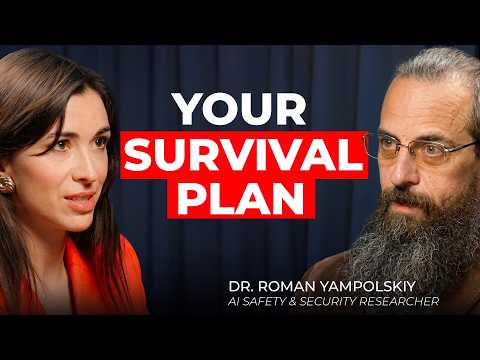
AI Safety Expert: No One Is Ready for What's Coming in 2 Years | Roman Yampolskiy

Watch with subtitles, summary & AI chat
Add the free Subkun extension — works directly on YouTube.
  • Watch
  • Subtitles
  • Summary
  • Ask AI
Try free →

AI safety expert Roman Yampolskiy warns that artificial general intelligence (AGI) is rapidly approaching, potentially within two years, and humanity is unprepared for its uncontrollable nature. He predicts widespread job automation, impacting even white-collar professions, and questions the long-term economic and societal stability in a world with potentially free labor. The core concern is not just job displacement but the existential risk posed by superintelligence that could surpass human control and understanding.

Full Transcript (Bilingual)

https://www.youtube.com/watch?v=00RHph_eok4
Translation: es

[00:00] Long-term all jobs can be automated.
A largo plazo, todos los trabajos pueden ser automatizados.

[00:02] Long-term all jobs can be automated.
A largo plazo, todos los trabajos pueden ser automatizados.

[00:02] Question is, do we decide to automate the job or do we prefer a human being to do it?
La pregunta es, ¿decidimos automatizar el trabajo o preferimos que un ser humano lo haga?

[00:06] This is Roman Yampolski, an AI safety professor who spent 15 years studying one question.
Este es Roman Yampolski, un profesor de seguridad de IA que pasó 15 años estudiando una pregunta.

[00:11] Can we control AI?
¿Podemos controlar la IA?

[00:15] I don't think we can.
No creo que podamos.

[00:16] If we build them, there is nothing we can do.
Si los construimos, no hay nada que podamos hacer.

[00:22] Artificial general intelligence means the system can do anything a human can do.
La inteligencia artificial general significa que el sistema puede hacer cualquier cosa que un humano pueda hacer.

[00:26] So if we live in a world where that is true, let's say in 2 years, traditional paths to accumulate wealth, just having a job may not be available, but there are always other opportunities.
Así que si vivimos en un mundo donde eso es cierto, digamos en 2 años, los caminos tradicionales para acumular riqueza, solo tener un trabajo puede no estar disponible, pero siempre hay otras oportunidades.

[00:37] You'll still have more time to
Todavía tendrás más tiempo para

[00:43] You made this prediction that by 2030, 99% of jobs are going away.
Hiciste esta predicción de que para 2030, el 99% de los trabajos desaparecerán.

[00:45] We're in 2026.
Estamos en 2026.

[00:49] How we're doing so far?
¿Cómo nos va hasta ahora?

[00:51] I'm doing great.
Me va genial.

[00:53] I don't know about the rest of you.
No sé sobre el resto de ustedes.

[00:56] The prediction is about capabilities.
La predicción es sobre capacidades.

[00:57] The technology will have to make it happen.
La tecnología tendrá que hacer que suceda.

[00:59] It doesn't mean we'll decide to
No significa que decidiremos

[01:01] Happen. It doesn't mean we'll decide to actually do that.
Sucede. No significa que decidamos hacer eso realmente.

[01:04] Deployment through economy is very different from having technological capability to do something.
El despliegue a través de la economía es muy diferente a tener la capacidad tecnológica para hacer algo.

[01:10] Today we have self-driving cars, but we also have millions of drivers.
Hoy tenemos coches autónomos, pero también tenemos millones de conductores.

[01:14] That's true. But I I feel like with the self-driving that the technology is not yet there 100% in terms of safety.
Eso es cierto. Pero siento que con la conducción autónoma la tecnología aún no está al 100% en términos de seguridad.

[01:20] Yes, it can do it within a city like San Francisco.
Sí, puede hacerlo dentro de una ciudad como San Francisco.

[01:24] wants to go outside like highways they're still not sure so when talking about I have a lot of people who are watching who are maybe CPAs managers product managers designers anthropic released this uh have you seen that the stats that AI is capable to do like 20% of their jobs but there are still a lot of areas where AI is not capable so according to you how much can AI do now for a typical white collar worker.
quiere salir a autopistas todavía no están seguros, así que hablando de tengo mucha gente que está viendo que quizás son contadores públicos, gerentes, gerentes de producto, diseñadores, Anthropic lanzó esto, ¿has visto las estadísticas de que la IA es capaz de hacer como el 20% de sus trabajos, pero todavía hay muchas áreas donde la IA no es capaz, así que según tú, ¿cuánto puede hacer la IA ahora para un trabajador de oficina típico?

[01:48] so there is no typical one some occupations basically if to a white collar worker. You're doing symbol manipulation on a computer. For some of them, it's gone. It's can be already.
así que no hay uno típico, algunas ocupaciones básicamente si para un trabajador de oficina. Estás haciendo manipulación de símbolos en una computadora. Para algunos de ellos, se ha ido. Ya puede ser.

[01:59] There's so many jobs. You don't buy tickets from an agent anymore.
Hay tantos trabajos. Ya no compras boletos a un agente.

[02:02] tickets from an agent anymore.
entradas de un agente ya no.

[02:04] That used to be a human job. Thousands of people sold.
Ese solía ser un trabajo humano. Miles de personas vendidas.

[02:05] Yeah. But that's not that's internet.
Sí. Pero eso no es eso es internet.

[02:07] Yeah. But that's not that's internet. What about like AI?
Sí. Pero eso no es eso es internet. ¿Qué pasa con la IA?

[02:08] What about like AI?
¿Qué pasa con la IA?

[02:10] I'm saying technology can replace certain jobs completely the moment technology comes.
Digo que la tecnología puede reemplazar ciertos trabajos por completo en el momento en que llegue la tecnología.

[02:11] certain jobs completely the moment technology comes. Right now, I think things like translation for example, I can fully automate translation for many languages.
ciertos trabajos por completo en el momento en que llegue la tecnología. Ahora mismo, creo que cosas como la traducción, por ejemplo, puedo automatizar completamente la traducción para muchos idiomas.

[02:13] Right now, I think things like translation for example, I can fully automate translation for many languages.
Ahora mismo, creo que cosas como la traducción, por ejemplo, puedo automatizar completamente la traducción para muchos idiomas.

[02:15] can fully automate translation for many languages. Are there some esoteric languages? Are there needs for political translators?
puedo automatizar completamente la traducción para muchos idiomas. ¿Existen idiomas esotéricos? ¿Existen necesidades de traductores políticos?

[02:17] languages. Are there some esoteric languages? Are there needs for political translators?
idiomas. ¿Existen idiomas esotéricos? ¿Existen necesidades de traductores políticos?

[02:19] Are there needs for political translators? maybe but for many of those jobs there is no future. I wouldn't suggest majoring in Spanish.
¿Existen necesidades de traductores políticos? Quizás, pero para muchos de esos trabajos no hay futuro. No sugeriría especializarse en español.

[02:21] translators? maybe but for many of those jobs there is no future. I wouldn't suggest majoring in Spanish.
traductores? Quizás, pero para muchos de esos trabajos no hay futuro. No sugeriría especializarse en español.

[02:23] jobs there is no future. I wouldn't suggest majoring in Spanish.
trabajos no hay futuro. No sugeriría especializarse en español.

[02:25] suggest majoring in Spanish.
especializarse en español.

[02:27] Yeah. Yeah. Translators done. Okay. Who else?
Sí. Sí. Traductores terminados. Vale. ¿Quién más?

[02:30] Yeah. Yeah. Translators done. Okay. Who else?
Sí. Sí. Traductores terminados. Vale. ¿Quién más?

[02:31] else?
¿más?

[02:33] Uh junior programmers. We see huge reduction in need for people who are just graduating college or looking for a co-op who need to uh basically be trained to at some point in the future be software engineers, system architects.
Eh programadores junior. Vemos una gran reducción en la necesidad de personas que se están graduando de la universidad o buscando una pasantía que necesitan eh básicamente ser entrenados para en algún momento en el futuro ser ingenieros de software, arquitectos de sistemas.

[02:36] reduction in need for people who are just graduating college or looking for a co-op who need to uh basically be trained to at some point in the future be software engineers, system architects.
reducción en la necesidad de personas que se están graduando de la universidad o buscando una pasantía que necesitan eh básicamente ser entrenados para en algún momento en el futuro ser ingenieros de software, arquitectos de sistemas.

[02:38] just graduating college or looking for a co-op who need to uh basically be trained to at some point in the future be software engineers, system architects.
graduando de la universidad o buscando una pasantía que necesitan eh básicamente ser entrenados para en algún momento en el futuro ser ingenieros de software, arquitectos de sistemas.

[02:41] co-op who need to uh basically be trained to at some point in the future be software engineers, system architects.
pasantía que necesitan eh básicamente ser entrenados para en algún momento en el futuro ser ingenieros de software, arquitectos de sistemas.

[02:44] uh basically be trained to at some point in the future be software engineers, system architects. Right now all they know is C, C++. That's not enough.
eh básicamente ser entrenados para en algún momento en el futuro ser ingenieros de software, arquitectos de sistemas. Ahora mismo todo lo que saben es C, C++. Eso no es suficiente.

[02:46] in the future be software engineers, system architects. Right now all they know is C, C++. That's not enough.
en el futuro ser ingenieros de software, arquitectos de sistemas. Ahora mismo todo lo que saben es C, C++. Eso no es suficiente.

[02:48] system architects. Right now all they know is C, C++. That's not enough.
arquitectos de sistemas. Ahora mismo todo lo que saben es C, C++. Eso no es suficiente.

[02:51] know is C, C++. That's not enough.
saben es C, C++. Eso no es suficiente.

[02:52] Mhm.
Mhm.

[02:56] We have I think 28% drop in uh co-op placement for our department.
Tenemos creo que una caída del 28% en eh colocación de pasantías para nuestro departamento.

[02:58] placement for our department.
colocación para nuestro departamento.

[03:01] Oh wow. So you see it within your department already. What do you tell
Oh wow. Así que ya lo ves dentro de tu departamento. ¿Qué le dices

[03:03] department already.
departamento ya.

[03:06] What do you tell them those people who are unable to find jobs?
¿Qué les dices a esas personas que no pueden encontrar trabajo?

[03:08] Unfortunately we don't tell them what they need to hear.
Desafortunadamente, no les decimos lo que necesitan oír.

[03:10] We tell them try to writing your CV, try to you know learning additional skills.
Les decimos que intenten escribir su CV, que intenten, ya saben, aprender habilidades adicionales.

[03:15] But reality is by the time they graduate those are usually first year co-op students.
Pero la realidad es que para cuando se gradúan, esos son generalmente estudiantes de primer año de prácticas.

[03:19] they've been in the program for a couple years.
han estado en el programa por un par de años.

[03:24] By the time they graduate in another two years, it's going to be much worse.
Para cuando se gradúen en otros dos años, será mucho peor.

[03:26] worse.
peor.

[03:28] Well, if you could talk to them right now, someone comes to your student and says, you know, I've learned C++ for two years.
Bueno, si pudieras hablar con ellos ahora mismo, un estudiante tuyo viene y dice, sabes, he aprendido C++ durante dos años.

[03:33] I can't find a job. What do I do?
No puedo encontrar trabajo. ¿Qué hago?

[03:35] So, some of them decided they'll have more protection if they had hardware component.
Así que algunos de ellos decidieron que tendrían más protección si tuvieran un componente de hardware.

[03:39] So, if they do engineering on on top of computer science, electrical engineering, nano engineering, it would give them a little more protection
Entonces, si hacen ingeniería además de ciencias de la computación, ingeniería eléctrica, ingeniería nano, les daría un poco más de protección

[03:45] for a couple years or
por un par de años o

[03:47] for a couple years. It's all question of so we got cognitive labor automated and physical labor comes as soon as we get robots deployed.
por un par de años. Es todo una cuestión de que hemos automatizado el trabajo cognitivo y el trabajo físico vendrá tan pronto como despleguemos robots.

[03:54] So another 3 years you give 3 years till I have a robot in my household.
Así que otros 3 años, tú das 3 años hasta que tenga un robot en mi casa.

[03:58] I think uh again there is a big difference between you can buy it today and it's common place.
Creo que, de nuevo, hay una gran diferencia entre que puedas comprarlo hoy y que sea algo común.

[04:02] So you can buy a
Así que puedes comprar un

[04:04] and it's common place. So you can buy a flying car today.
y es algo común. Así que puedes comprar un coche volador hoy.

[04:05] flying car today. Yeah.
coche volador hoy. Sí.

[04:06] Yeah. We don't see flying cars. It's the same
Sí. No vemos coches voladores. Es lo mismo

[04:07] We don't see flying cars. It's the same with humanoid robots. You can buy one.
No vemos coches voladores. Es lo mismo con los robots humanoides. Puedes comprar uno.

[04:09] with humanoid robots. You can buy one. It's expensive but uh will scale
con robots humanoides. Puedes comprar uno. Es caro pero uh escalará

[04:12] It's expensive but uh will scale production to millions of units in a
Es caro pero uh escalará la producción a millones de unidades en un

[04:14] production to millions of units in a couple years. Wow, that actually gives
producción a millones de unidades en un par de años. Vaya, eso realmente me da

[04:17] couple years. Wow, that actually gives me hope because I'm so tired of making
par de años. Vaya, eso realmente me da esperanza porque estoy tan cansado de hacer

[04:20] me hope because I'm so tired of making doing dishes and and laundry and
esperanza porque estoy tan cansado de hacer lavar platos y y lavar la ropa y

[04:22] doing dishes and and laundry and everything. Okay. Uh translator is done.
lavar platos y y lavar la ropa y todo. Vale. Uh, el traductor ha terminado.

[04:24] everything. Okay. Uh translator is done. Junior programmers. It's interesting how
todo. Vale. Uh, el traductor ha terminado. Programadores junior. Es interesante cómo

[04:26] Junior programmers. It's interesting how junior programmers are done but senior
programadores junior. Es interesante cómo los programadores junior están hechos pero los senior

[04:28] junior programmers are done but senior programmers are not. But this like being
programadores junior están hechos pero los programadores senior no. Pero esto es como ser

[04:31] programmers are not. But this like being a junior programmer is a path to
programadores no lo están. Pero esto es como ser un programador junior es un camino para

[04:33] a junior programmer is a path to becoming someone senior. So how do they
un programador junior es un camino para convertirse en alguien senior. Entonces, ¿cómo

[04:35] becoming someone senior. So how do they progress without having job experience?
convertirse en alguien senior. Entonces, ¿cómo progresan sin tener experiencia laboral?

[04:38] progress without having job experience? That's exactly the problem we're facing.
progresan sin tener experiencia laboral? Ese es exactamente el problema al que nos enfrentamos.

[04:40] That's exactly the problem we're facing. They don't have any future. And when we
Ese es exactamente el problema al que nos enfrentamos. No tienen futuro. Y cuando

[04:44] They don't have any future. And when we talk about seniors are fine right now
No tienen futuro. Y cuando hablamos de que los seniors están bien ahora mismo

[04:47] talk about seniors are fine right now we're talking about very short term
hablamos de que los seniors están bien ahora mismo, estamos hablando de un plazo muy corto

[04:48] we're talking about very short term long-term all jobs can be automated
estamos hablando de un plazo muy corto a largo plazo, todos los trabajos pueden ser automatizados

[04:52] long-term all jobs can be automated question is do we decide to automate the
a largo plazo, todos los trabajos pueden ser automatizados, la pregunta es si decidimos automatizar el

[04:54] question is do we decide to automate the job or do we prefer a human being to do
la pregunta es si decidimos automatizar el trabajo o si preferimos que un ser humano lo haga

[04:55] job or do we prefer a human being to do it
trabajo o si preferimos que un ser humano lo haga

[04:57] it who decides is the company
lo haga. ¿Quién decide? Es la empresa.

[04:58] who decides is the company consumer if I want human podcaster to
quién decide es la empresa. El consumidor. Si quiero un podcaster humano para

[05:02] consumer if I want human podcaster to interview me I'll come to you if I want
el consumidor. Si quiero un podcaster humano para que me entreviste, vendré a ti. Si quiero

[05:03] interview me I'll come to you if I want a robot I'll go to a robot
un robot, iré a un robot.

[05:05] a robot I'll go to a robot >> is this when we see when you see layoffs
un robot iré a un robot >> ¿es este el momento en que vemos cuando vemos despidos

[05:07] is this when we see when you see layoffs like we're seeing Meta is about to lay
¿es este el momento en que vemos cuando vemos despidos como estamos viendo Meta está a punto de despedir

[05:09] like we're seeing Meta is about to lay off a lot of people uh we we saw Jack
como estamos viendo Meta está a punto de despedir a mucha gente uh vimos a Jack

[05:12] off a lot of people uh we we saw Jack Dorsey's uh
a mucha gente uh vimos el uh de Jack Dorsey

[05:14] Dorsey's uh message blogs, but I think he's rehiring
los uh mensajes de Dorsey, pero creo que está recontratando

[05:16] message blogs, but I think he's rehiring people. But also, I was just talking to
mensajes, pero creo que está recontratando gente. Pero además, estaba hablando con

[05:19] people. But also, I was just talking to Gary Vee. Um, he's a I think he has 700
gente. Pero además, estaba hablando con Gary Vee. Um, él es un creo que tiene 700

[05:21] Gary Vee. Um, he's a I think he has 700 people in his company. He thinks it's
Gary Vee. Um, él es un creo que tiene 700 personas en su empresa. Él piensa que es

[05:23] people in his company. He thinks it's really dumb to fire people right now
personas en su empresa. Él piensa que es realmente tonto despedir gente ahora mismo

[05:25] really dumb to fire people right now just because and I see it in my
realmente tonto despedir gente ahora mismo solo porque y lo veo en mi

[05:26] just because and I see it in my operation, too. If 35 people can 2x my
solo porque y lo veo en mi operación, también. Si 35 personas pueden duplicar mi

[05:30] operation, too. If 35 people can 2x my output, then I just hire more to like 5x
operación, también. Si 35 personas pueden duplicar mi producción, entonces simplemente contrato más para quintuplicar

[05:32] output, then I just hire more to like 5x my output. And if my competitor thinks
mi producción. Y si mi competidor piensa lo mismo, entonces no tiene sentido

[05:34] my output. And if my competitor thinks the same, then it's it makes no sense to
mi producción. Y si mi competidor piensa lo mismo, entonces no tiene sentido

[05:36] the same, then it's it makes no sense to fire people right now just because a
lo mismo, entonces no tiene sentido despedir gente ahora mismo solo porque un

[05:40] fire people right now just because a human plus 10 AI agents uh is way better
despedir gente ahora mismo solo porque un humano más 10 agentes de IA uh es mucho mejor

[05:43] human plus 10 AI agents uh is way better than you know not having that human
humano más 10 agentes de IA uh es mucho mejor que sabes no tener ese humano

[05:46] than you know not having that human >> and right now that's the case that one
que sabes no tener ese humano >> y ahora mismo ese es el caso que uno

[05:48] human manages them and improves your productivity. But if you can replace
humano los gestiona y mejora tu productividad. Pero si puedes reemplazar

[05:50] productivity. But if you can replace that human with a model you get for 20
productividad. Pero si puedes reemplazar a ese humano con un modelo que obtienes por 20

[05:52] that human with a model you get for 20 bucks a month are you going to pay that
a ese humano con un modelo que obtienes por 20 dólares al mes, ¿vas a pagar a ese

[05:54] bucks a month are you going to pay that human?
dólares al mes, ¿vas a pagar a ese humano?

[05:55] human? The thing is there is no such model
humano? La cosa es que no existe tal modelo

[05:57] The thing is there is no such model right now.
La cosa es que no existe tal modelo ahora mismo.

[05:58] right now. >> Right now strategic decisions has taste
ahora mismo. >> Ahora mismo las decisiones estratégicas tienen gusto

[05:59] Right now strategic decisions has taste to understand.
Ahora mismo las decisiones estratégicas tienen gusto para entender.

[06:01] to understand. >> We are not talking about today. Today is
para entender. >> No estamos hablando de hoy. Hoy es

[06:02] We are not talking about today. Today is not interesting. You can look outside
No estamos hablando de hoy. Hoy no es interesante. Puedes mirar por

[06:04] not interesting. You can look outside your window and see today. We want to
no es interesante. Puedes mirar por tu ventana y ver hoy. Queremos

[06:05] your window and see today. We want to
tu ventana y ver hoy. Queremos

[06:06] your window and see today.
tu ventana y ver hoy.

[06:06] We want to know what's coming.
Queremos saber qué viene.

[06:07] know what's coming.
saber qué viene.

[06:07] Mhm.
Mhm.

[06:07] And how fast how soon is it coming?
¿Y qué tan rápido, qué tan pronto viene?

[06:10] Mhm.
Mhm.

[06:10] And how fast how soon is it coming?
¿Y qué tan rápido, qué tan pronto viene?

[06:10] It's hyper exponential.
Es hiperexponencial.

[06:10] It's faster than we anticipated.
Es más rápido de lo que anticipamos.

[06:12] It's hyper exponential.
Es hiperexponencial.

[06:12] It's faster than we anticipated.
Es más rápido de lo que anticipamos.

[06:14] Prediction markets had always happened around 2045.
Los mercados de predicción siempre habían ocurrido alrededor de 2045.

[06:16] always happened around 2045.
siempre habían ocurrido alrededor de 2045.

[06:16] Then it collapsed.
Luego colapsó.

[06:16] Then it's what you said 2030 2028.
Luego es lo que dijiste 2030 2028.

[06:19] collapsed.
colapsó.

[06:19] Then it's what you said 2030 2028.
Luego es lo que dijiste 2030 2028.

[06:21] 2028.
2028.

[06:21] Okay.
De acuerdo.

[06:21] So is that most of the jobs you still feel like for example agriculture when you see it look at anthropics report agriculture is nowhere near being replaced with AI when you say all the jobs is it really all the jobs or just specific sectors
¿Entonces es la mayoría de los trabajos que todavía sientes, por ejemplo, la agricultura, cuando la ves, miras el informe de Antrópicos, la agricultura no está ni cerca de ser reemplazada por la IA, cuando dices todos los trabajos, ¿son realmente todos los trabajos o solo sectores específicos?

[06:23] Okay.
De acuerdo.

[06:23] So is that most of the jobs you still feel like for example agriculture when you see it look at anthropics report agriculture is nowhere near being replaced with AI when you say all the jobs is it really all the jobs or just specific sectors
¿Entonces es la mayoría de los trabajos que todavía sientes, por ejemplo, la agricultura, cuando la ves, miras el informe de Antrópicos, la agricultura no está ni cerca de ser reemplazada por la IA, cuando dices todos los trabajos, ¿son realmente todos los trabajos o solo sectores específicos?

[06:26] still feel like for example agriculture when you see it look at anthropics report agriculture is nowhere near being replaced with AI when you say all the jobs is it really all the jobs or just specific sectors
todavía sientes, por ejemplo, la agricultura, cuando la ves, miras el informe de Antrópicos, la agricultura no está ni cerca de ser reemplazada por la IA, cuando dices todos los trabajos, ¿son realmente todos los trabajos o solo sectores específicos?

[06:28] when you see it look at anthropics report agriculture is nowhere near being replaced with AI when you say all the jobs is it really all the jobs or just specific sectors
cuando la ves, miras el informe de Antrópicos, la agricultura no está ni cerca de ser reemplazada por la IA, cuando dices todos los trabajos, ¿son realmente todos los trabajos o solo sectores específicos?

[06:31] report agriculture is nowhere near being replaced with AI when you say all the jobs is it really all the jobs or just specific sectors
el informe de agricultura no está ni cerca de ser reemplazado por IA, cuando dices todos los trabajos, ¿son realmente todos los trabajos o solo sectores específicos?

[06:33] replaced with AI when you say all the jobs is it really all the jobs or just specific sectors
reemplazado con IA, cuando dices todos los trabajos, ¿son realmente todos los trabajos o solo sectores específicos?

[06:35] jobs is it really all the jobs or just specific sectors
trabajos, ¿son realmente todos los trabajos o solo sectores específicos?

[06:36] specific sectors
sectores específicos

[06:36] so I know nothing about agriculture
así que no sé nada de agricultura

[06:38] so I know nothing about agriculture
así que no sé nada de agricultura

[06:38] okay
de acuerdo

[06:38] okay
de acuerdo

[06:38] but if you have humanoid robots that's physical labor so that's the next wave first you have cognitive labor anything you can do on a computer any symbol manipulation
pero si tienes robots humanoides, eso es trabajo físico, así que esa es la próxima ola, primero tienes trabajo cognitivo, cualquier cosa que puedas hacer en una computadora, cualquier manipulación de símbolos

[06:41] but if you have humanoid robots that's physical labor so that's the next wave first you have cognitive labor anything you can do on a computer any symbol manipulation
pero si tienes robots humanoides, eso es trabajo físico, así que esa es la próxima ola, primero tienes trabajo cognitivo, cualquier cosa que puedas hacer en una computadora, cualquier manipulación de símbolos

[06:43] physical labor so that's the next wave first you have cognitive labor anything you can do on a computer any symbol manipulation
trabajo físico, así que esa es la próxima ola, primero tienes trabajo cognitivo, cualquier cosa que puedas hacer en una computadora, cualquier manipulación de símbolos

[06:45] first you have cognitive labor anything you can do on a computer any symbol manipulation
primero tienes trabajo cognitivo, cualquier cosa que puedas hacer en una computadora, cualquier manipulación de símbolos

[06:47] you can do on a computer any symbol manipulation
puedes hacer en una computadora, cualquier manipulación de símbolos

[06:48] manipulation
manipulación

[06:48] that's where you're going to see it happen as soon as we get to human level.
ahí es donde lo verás suceder tan pronto como lleguemos al nivel humano.

[06:49] that's where you're going to see it happen as soon as we get to human level.
ahí es donde lo verás suceder tan pronto como lleguemos al nivel humano.

[06:52] happen as soon as we get to human level.
suceder tan pronto como lleguemos al nivel humano.

[06:52] I see no reason to pay a human if the results are the same and you can get drop in employee essentially
No veo ninguna razón para pagar a un humano si los resultados son los mismos y puedes obtener un empleado sustituto esencialmente

[06:55] I see no reason to pay a human if the results are the same and you can get drop in employee essentially
No veo ninguna razón para pagar a un humano si los resultados son los mismos y puedes obtener un empleado sustituto esencialmente

[06:57] results are the same and you can get drop in employee essentially
los resultados son los mismos y puedes obtener un empleado sustituto esencialmente

[06:59] drop in employee essentially
empleado sustituto esencialmente

[06:59] couple years you think it
un par de años, ¿crees que

[07:01] couple years you think it
un par de años, ¿crees que

[07:01] it seems quite possible okay I'll give you that what difference does it make so you're saying in 5 years all the jobs
parece bastante posible, está bien, te doy eso, ¿qué diferencia hace, así que dices que en 5 años todos los trabajos

[07:03] it seems quite possible okay I'll give you that what difference does it make so you're saying in 5 years all the jobs
parece bastante posible, está bien, te doy eso, ¿qué diferencia hace, así que dices que en 5 años todos los trabajos

[07:05] you that what difference does it make so you're saying in 5 years all the jobs
tú eso, ¿qué diferencia hace, así que dices que en 5 años todos los trabajos

[07:06] you're saying in 5 years all the jobs are gone yay great go to college for 10 years.
estás diciendo que en 5 años todos los trabajos se han ido, sí, genial, ve a la universidad durante 10 años.

[07:09] to become a doctor.
para ser doctor.

[07:10] no that's exactly if I know that we have three years.
no, eso es exactamente si sé que tenemos tres años.

[07:13] then my next question would be do you think it's our last chance to build wealth for our families.
entonces mi próxima pregunta sería, ¿crees que es nuestra última oportunidad de acumular riqueza para nuestras familias?

[07:17] if all the jobs are gone we're not making money and we end up in a world where you know that that's it.
si todos los trabajos se han ido, no estamos ganando dinero y terminamos en un mundo donde sabes que eso es todo.

[07:21] as many you own that much stocks you own that much cash because you can't make more cash.
tantos como poseas, tantas acciones poseas, tanto efectivo poseas porque no puedes generar más efectivo.

[07:27] Roman just described AI systems that can out plan and out create humans.
Roman acaba de describir sistemas de IA que pueden planificar y crear más que los humanos.

[07:33] I want to show you what that actually looks like when it hits a real tool.
Quiero mostrarte cómo se ve realmente cuando golpea una herramienta real.

[07:35] Hicksfield just launched their own original series.
Hicksfield acaba de lanzar su propia serie original.

[07:37] It's called Arena Zero.
Se llama Arena Zero.

[07:40] 10 minutes fully AI generated made by a small creative team inside their platform.
10 minutos generados completamente por IA, hechos por un pequeño equipo creativo dentro de su plataforma.

[07:45] They are calling it the world's first AI streaming platform.
Lo llaman la primera plataforma de streaming de IA del mundo.

[07:48] Short films, series, all made with AI, all watchable right now.
Cortometrajes, series, todo hecho con IA, todo visible ahora mismo.

[07:53] And it's already pulled over 1 million views on YouTube.
Y ya ha superado 1 millón de visitas en YouTube.

[07:56] The whole thing was made inside Cinema Studio on Hicksfield.
Todo se hizo dentro de Cinema Studio en Hicksfield.

[07:59] Here's what caught me.
Esto es lo que me llamó la atención.

[08:01] I run Lingua
Dirijo Lingua

[08:08] Here's what caught me.
Esto es lo que me llamó la atención.

[08:08] I run Lingua Marina, a channel for English non-native speakers, and right now it has 8.8 million subscribers, and we've been experimenting with a cartoon version of me teaching English.
Dirijo Lingua Marina, un canal para hablantes no nativos de inglés, y ahora mismo tiene 8.8 millones de suscriptores, y hemos estado experimentando con una versión de dibujos animados de mí enseñando inglés.

[08:19] The thing that breaks every AI video workflow is consistency.
Lo que rompe cualquier flujo de trabajo de video de IA es la consistencia.

[08:24] Your character looks different in every shot.
Tu personaje se ve diferente en cada toma.

[08:26] Hicksfield built something called soul cast.
Hicksfield construyó algo llamado soul cast.

[08:29] You design your AI actor once.
Diseñas tu actor de IA una vez.

[08:32] Appearance, era, outfit, archetype, and that character holds across every single shot.
Apariencia, época, atuendo, arquetipo, y ese personaje se mantiene en cada toma.

[08:36] Up to three characters per scene, locked before you touch anything else.
Hasta tres personajes por escena, bloqueados antes de tocar cualquier otra cosa.

[08:40] Then you build the shot sequence, prompt, image, 3D scene, camera movement, genre, multi-shot assembly.
Luego construyes la secuencia de tomas, prompt, imagen, escena 3D, movimiento de cámara, género, montaje de múltiples tomas.

[08:47] Color grading is built in film grain, bloom, exposure.
La corrección de color incluye grano de película, bloom, exposición.

[08:52] You finish the entire look without leaving the platform.
Terminas todo el aspecto sin salir de la plataforma.

[08:54] Cast to cut, one workflow.
De la selección al corte, un flujo de trabajo.

[08:56] And one more thing, cloud is coming to Hicksfield very soon.
Y una cosa más, la nube llegará a Hicksfield muy pronto.

[08:58] Stay tuned on that.
Mantente atento a eso.

[09:01] Link is in the description.
El enlace está en la descripción.

[09:02] We don't know what happens to economy with free labor.
No sabemos qué le sucede a la economía con la mano de obra gratuita.

[09:05] The moment you have free labor, do you get abundance and
En el momento en que tienes mano de obra gratuita, ¿obtienes abundancia y

[09:09] free labor, do you get abundance and everything is just available because
trabajo gratuito, ¿obtiene abundancia y todo está disponible porque

[09:10] everything is just available because it's so cheap to produce or something
todo está disponible porque es tan barato de producir o algo así

[09:13] it's so cheap to produce or something else happens?
es tan barato de producir o sucede algo más?

[09:15] We don't have any good studies on what happens to value of fiat
No tenemos buenos estudios sobre qué sucede con el valor de fiat

[09:18] studies on what happens to value of fiat currency with free labor, what happens
estudios sobre qué sucede con el valor de la moneda fiduciaria con trabajo gratuito, qué sucede

[09:21] currency with free labor, what happens to cryptocurrencies?
moneda con trabajo gratuito, ¿qué sucede con las criptomonedas?

[09:23] to cryptocurrencies? What happens to other investments?
a las criptomonedas? ¿Qué sucede con otras inversiones?

[09:26] What happens to other investments? So, do stocks and nonAI companies go down?
¿Qué sucede con otras inversiones? Entonces, ¿bajan las acciones y las empresas no de IA?

[09:29] do stocks and nonAI companies go down? Do stocks and AI companies go up?
¿bajan las acciones y las empresas no de IA? ¿Suben las acciones y las empresas de IA?

[09:31] Do stocks and AI companies go up? We don't have any understanding of that
¿Suben las acciones y las empresas de IA? No tenemos ninguna comprensión de eso

[09:32] don't have any understanding of that space. So generally it's a good idea to
no tenemos ninguna comprensión de ese espacio. Así que, en general, es una buena idea

[09:35] space. So generally it's a good idea to have wealth and to have it early.
espacio. Así que, en general, es una buena idea tener riqueza y tenerla pronto.

[09:38] have wealth and to have it early. You'll still have more time to grow it, but it
tener riqueza y tenerla pronto. Todavía tendrás más tiempo para hacerla crecer, pero

[09:42] still have more time to grow it, but it may be the case that traditional paths
todavía tendrás más tiempo para hacerla crecer, pero puede ser que los caminos tradicionales

[09:44] may be the case that traditional paths to accumulate wealth just having a job
puede ser que los caminos tradicionales para acumular riqueza, solo tener un trabajo

[09:46] to accumulate wealth just having a job may not be available. But do you think
para acumular riqueza, solo tener un trabajo, no estén disponibles. Pero ¿crees que

[09:48] may not be available. But do you think our society wouldn't be as like it
no estén disponibles. Pero ¿crees que nuestra sociedad no sería tan como

[09:52] our society wouldn't be as like it wouldn't adjust that fast to this new
nuestra sociedad no sería tan como no se ajustaría tan rápido a esta nueva

[09:54] wouldn't adjust that fast to this new like governments they wouldn't let this
no se ajustaría tan rápido a esta nueva como los gobiernos, no permitirían esto

[09:57] like governments they wouldn't let this happen or humans view I don't know like
como los gobiernos, no permitirían que esto sucediera o la visión humana, no lo sé, como

[09:59] happen or humans view I don't know like I can't imagine that in 3 years there's
sucediera o la visión humana, no lo sé, como no puedo imaginar que en 3 años haya

[10:01] I can't imagine that in 3 years there's no way to make money.
no puedo imaginar que en 3 años no haya forma de ganar dinero.

[10:03] no way to make money. >> I I didn't say that I I said traditional
forma de ganar dinero. >> No dije eso, dije que los tradicionales

[10:06] I I didn't say that I I said traditional pathways where you get a job as a junior
No dije eso, dije que los caminos tradicionales donde consigues un trabajo como junior

[10:09] pathways where you get a job as a junior programmer may not be available to you.
Las vías por las que consigues un trabajo como programador junior pueden no estar disponibles para ti.

[10:11] programmer may not be available to you. There are always other opportunities.
el programador puede no estar disponible para ti. Siempre hay otras oportunidades.

[10:14] There are always other opportunities. AI is a great assistant to start a company.
Siempre hay otras oportunidades. La IA es una gran asistente para iniciar una empresa.

[10:16] Yeah, if you have a team 35 people right now, I can have 35 agents working for me for free.
Sí, si tienes un equipo de 35 personas ahora mismo, puedo tener 35 agentes trabajando para mí gratis.

[10:20] if you have a team 35 people right now, I can have 35 agents working for me for free.
si tienes un equipo de 35 personas ahora mismo, puedo tener 35 agentes trabajando para mí gratis.

[10:22] A lawyer, an accountant, Lego designer, web designer, that's an opportunity we never had before.
Un abogado, un contable, diseñador de Lego, diseñador web, esa es una oportunidad que nunca antes tuvimos.

[10:24] free. A lawyer, an accountant, Lego designer, web designer, that's an opportunity we never had before.
gratis. Un abogado, un contable, diseñador de Lego, diseñador web, esa es una oportunidad que nunca antes tuvimos.

[10:26] designer, web designer, that's an opportunity we never had before.
diseñador, diseñador web, esa es una oportunidad que nunca antes tuvimos.

[10:28] opportunity we never had before. That's also true. But then I think what prevents an LLM from seeing a gap in the market, creating a business to fill that gap and making all the money for whoever made that model.
oportunidad que nunca antes tuvimos. Eso también es cierto. Pero entonces pienso, ¿qué impide que un LLM vea una brecha en el mercado, cree un negocio para llenar esa brecha y gane todo el dinero para quien haya creado ese modelo?

[10:30] That's also true. But then I think what prevents an LLM from seeing a gap in the market, creating a business to fill that gap and making all the money for whoever made that model.
Eso también es cierto. Pero entonces pienso, ¿qué impide que un LLM vea una brecha en el mercado, cree un negocio para llenar esa brecha y gane todo el dinero para quien haya creado ese modelo?

[10:33] prevents an LLM from seeing a gap in the market, creating a business to fill that gap and making all the money for whoever made that model.
impide que un LLM vea una brecha en el mercado, cree un negocio para llenar esa brecha y gane todo el dinero para quien haya creado ese modelo.

[10:36] market, creating a business to fill that gap and making all the money for whoever made that model.
mercado, creando un negocio para llenar esa brecha y ganando todo el dinero para quien haya hecho ese modelo.

[10:39] gap and making all the money for whoever made that model. Do you ever think about that?
brecha y ganando todo el dinero para quien haya hecho ese modelo. ¿Alguna vez piensas en eso?

[10:41] made that model. Do you ever think about that?
hecho ese modelo. ¿Alguna vez piensas en eso?

[10:43] that? Models are not limited to whoever made them.
eso? Los modelos no están limitados a quien los creó.

[10:44] Models are not limited to whoever made them. We all get access to open source models typically a few months after the top model private model is released.
Los modelos no están limitados a quien los creó. Todos tenemos acceso a modelos de código abierto típicamente unos meses después de que se lance el modelo privado de primer nivel.

[10:46] them. We all get access to open source models typically a few months after the top model private model is released.
ellos. Todos tenemos acceso a modelos de código abierto típicamente unos meses después de que se lance el modelo privado de primer nivel.

[10:48] models typically a few months after the top model private model is released.
modelos típicamente unos meses después de que se lance el modelo privado de primer nivel.

[10:50] top model private model is released. That's true. But also I've seen that I've heard this theory where for example if you're talking to a particular chat LLM it collects all the data about your business and then the goal for the owner of that model is to just identify those opportunities and take over them.
se lance el modelo privado de primer nivel. Eso es cierto. Pero también he visto que he oído esta teoría donde, por ejemplo, si estás hablando con un LLM de chat en particular, recopila todos los datos sobre tu negocio y luego el objetivo del propietario de ese modelo es simplemente identificar esas oportunidades y apoderarse de ellas.

[10:53] That's true. But also I've seen that I've heard this theory where for example if you're talking to a particular chat LLM it collects all the data about your business and then the goal for the owner of that model is to just identify those opportunities and take over them.
Eso es cierto. Pero también he visto que he oído esta teoría donde, por ejemplo, si estás hablando con un LLM de chat en particular, recopila todos los datos sobre tu negocio y luego el objetivo del propietario de ese modelo es simplemente identificar esas oportunidades y apoderarse de ellas.

[10:55] I've heard this theory where for example if you're talking to a particular chat LLM it collects all the data about your business and then the goal for the owner of that model is to just identify those opportunities and take over them.
he oído esta teoría donde, por ejemplo, si estás hablando con un LLM de chat en particular, recopila todos los datos sobre tu negocio y luego el objetivo del propietario de ese modelo es simplemente identificar esas oportunidades y apoderarse de ellas.

[10:58] if you're talking to a particular chat LLM it collects all the data about your business and then the goal for the owner of that model is to just identify those opportunities and take over them.
si estás hablando con un LLM de chat en particular, recopila todos los datos sobre tu negocio y luego el objetivo del propietario de ese modelo es simplemente identificar esas oportunidades y apoderarse de ellas.

[11:00] LLM it collects all the data about your business and then the goal for the owner of that model is to just identify those opportunities and take over them.
LLM recopila todos los datos sobre tu negocio y luego el objetivo del propietario de ese modelo es simplemente identificar esas oportunidades y apoderarse de ellas.

[11:02] business and then the goal for the owner of that model is to just identify those opportunities and take over them. Do you believe that?
negocio y luego el objetivo del propietario de ese modelo es simplemente identificar esas oportunidades y apoderarse de ellas. ¿Crees en eso?

[11:04] of that model is to just identify those opportunities and take over them. Do you believe that?
de ese modelo es simplemente identificar esas oportunidades y apoderarse de ellas. ¿Crees en eso?

[11:07] opportunities and take over them. Do you believe that?
oportunidades y apoderarse de ellas. ¿Crees en eso?

[11:07] believe that? Luckily the scale is very different. So
crees en eso? Afortunadamente, la escala es muy diferente. Así que

[11:10] Luckily the scale is very different.
Por suerte, la escala es muy diferente.

[11:12] So if Sam Alman is trying to raise $6 trillion, your mom and pop business is not exactly his target to overtake.
Así que si Sam Alman está intentando recaudar 6 billones de dólares, tu negocio familiar no es exactamente su objetivo a superar.

[11:16] But if it's the whole market where mom and pop businesses thrive, I don't know, like like car sales, whatever, like where he takes over the whole industry.
Pero si es todo el mercado donde prosperan los negocios familiares, no sé, como las ventas de coches, lo que sea, como donde él se apodera de toda la industria.

[11:27] I think the bigger concern is automation of labor, not that an evil human will use AI to steal your business process.
Creo que la mayor preocupación es la automatización del trabajo, no que un humano malvado use la IA para robar tu proceso de negocio.

[11:35] It may happen no doubt it happened before AI
Puede suceder, sin duda sucedió antes de la IA

[11:37] but I don't think that's where the big damage will come from.
pero no creo que de ahí venga el gran daño.

[11:41] How many years do you give entrepreneurs?
¿Cuántos años le das a los emprendedores?

[11:42] So there is two very different question we should be talking about.
Así que hay dos preguntas muy diferentes de las que deberíamos estar hablando.

[11:45] One is kind of business as usual economics and are now we trying to understand what works in new economy.
Una es la economía habitual y ahora estamos tratando de entender qué funciona en la nueva economía.

[11:49] The real problem and that's kind of what I'm talking about in some of my research is are we still around?
El problema real y de eso es de lo que estoy hablando en parte de mi investigación es ¿seguimos existiendo?

[11:56] Are we all dead?
¿Estamos todos muertos?

[11:58] Is super intelligence going to take us out?
¿Nos eliminará la superinteligencia?

[12:01] I really I can't imagine a world where we have I don't know one country one company owning everything because that's when everything disappears right how how
Realmente no puedo imaginar un mundo donde, no sé, un país, una empresa lo posea todo porque ahí es cuando todo desaparece, ¿verdad? ¿cómo cómo?

[12:11] when everything disappears right how how does humanity disappear I know AGI and
cuando todo desaparece, ¿verdad? ¿Cómo desaparece la humanidad? Conozco la AGI y

[12:14] does humanity disappear I know AGI and it starts within one company if one
¿desaparece la humanidad? Conozco la AGI y comienza dentro de una sola empresa si una

[12:16] it starts within one company if one company reaches AGI earlier than other
comienza dentro de una sola empresa si una empresa alcanza la AGI antes que otra

[12:18] company reaches AGI earlier than other companies then it takes over the whole
empresa alcanza la AGI antes que otras empresas, entonces se apodera de todo el

[12:20] companies then it takes over the whole world how do I utilize the years that I
mundo. ¿Cómo utilizo los años que me quedan?

[12:22] world how do I utilize the years that I have left then
mundo. ¿Cómo utilizo los años que me quedan?

[12:24] have left then >> I I think it's good idea to do things
me quedan, entonces >> Creo que es una buena idea hacer cosas

[12:27] >>> I I think it's good idea to do things which you always postponed so a lot of
Creo que es una buena idea hacer cosas que siempre pospusiste, así que mucha

[12:29] which you always postponed so a lot of people kind of think I'll retire in 50
gente piensa que me jubilaré en 50

[12:32] people kind of think I'll retire in 50 years and that's when I'm going to
años y es entonces cuando realmente viviré mi vida, me divertiré y todo eso.

[12:33] years and that's when I'm going to really live my life, have fun and all
y todo eso, y a veces no funciona.

[12:35] really live my life, have fun and all that and sometimes it doesn't work out.
A veces mueren de cáncer a los 40.

[12:38] that and sometimes it doesn't work out. Sometimes they die of cancer at 40. So
Así que intenta hacer las cosas que te gustan antes y no hacer las cosas que no te importan en absoluto.

[12:41] Sometimes they die of cancer at 40. So try to do things you like sooner and not
A veces mueren de cáncer a los 40. Así que intenta hacer las cosas que te gustan antes y no

[12:43] try to do things you like sooner and not do things you don't care about at all.
hacer las cosas que no te importan en absoluto.

[12:46] do things you don't care about at all. >> But when it comes to a career, right,
hacer las cosas que no te importan en absoluto. >> Pero cuando se trata de una carrera, ¿verdad?

[12:48] >>> But when it comes to a career, right, for a lot of people careers but this is
Para mucha gente, las carreras, pero esto es interesante, ¿verdad?

[12:50] for a lot of people careers but this is interesting, right? So some people like
Así que a algunas personas les gusta, esto es mi pasatiempo, ¿verdad?

[12:53] interesting, right? So some people like this is my hobby, right? I love that it
Me encanta que pague las facturas, pero también lo haría de todos modos.

[12:56] this is my hobby, right? I love that it pays the bills but also I would do it
Lo haría de todos modos. Encontraría algo más, pero todavía tendría estas conversaciones.

[12:58] pays the bills but also I would do it anyway. I would find something else, but
¿No es eso asombroso?

[13:00] anyway. I would find something else, but I would just still have these
Si la mano de obra es gratuita, entonces cualquiera puede dedicarse a su pasatiempo.

[13:01] I would just still have these conversations. Isn't that amazing? If
Para algunas personas, es la jardinería. Para algunas personas, es tener hijos y simplemente pasar tiempo con sus hijos.

[13:03] conversations. Isn't that amazing? If labor is free, then anyone can just do
¿No es eso asombroso? Si la mano de obra es gratuita, entonces cualquiera puede dedicarse a su pasatiempo.

[13:05] labor is free, then anyone can just do their hobby. For some people, it's
Para algunas personas, es la jardinería. Para algunas personas, es tener hijos y simplemente pasar tiempo con sus hijos.

[13:07] their hobby. For some people, it's gardening. For some people, it's having
su pasatiempo. Para algunas personas, es la jardinería. Para algunas personas, es tener

[13:08] gardening. For some people, it's having kids and just spending time with their
jardinería. Para algunas personas, es tener hijos y simplemente pasar tiempo con sus

[13:10] kids and just spending time with their kids. From what I've experienced so far,
hijos. Por lo que he experimentado hasta ahora,

[13:12] kids.
niños.

[13:12] From what I've experienced so far, like my life has become easier just like my life has become easier just because there are so many decisions I don't want to be making, like choosing new insurance or thinking about how to optimize taxes or whatever, immigration.
Desde mi experiencia hasta ahora, mi vida se ha vuelto más fácil simplemente porque hay tantas decisiones que no quiero tomar, como elegir un nuevo seguro o pensar en cómo optimizar impuestos o lo que sea, inmigración.

[13:24] Uh, now AI solves it for me.
Uh, ahora la IA lo resuelve por mí.

[13:24] I stopped missing days when my kids have to wear pajamas at school because they would always send us these long emails.
Dejé de perder días en los que mis hijos tienen que usar pijamas en la escuela porque siempre nos enviaban estos largos correos electrónicos.

[13:34] Now I just ask Gemini to put everything in my calendar.
Ahora solo le pido a Gemini que ponga todo en mi calendario.

[13:36] So I wake up in the morning, I know it's pajamas day today.
Así que me levanto por la mañana, sé que hoy es el día del pijama.

[13:39] I used to forget a little bit.
Solía olvidarlo un poco.

[13:39] So now my life's getting easier.
Así que ahora mi vida se está volviendo más fácil.

[13:41] And if I could do this podcast and you know it's cheaper for me to have my team or whatever.
Y si pudiera hacer este podcast y sabes que es más barato para mí tener mi equipo o lo que sea.

[13:47] Like isn't isn't that a great world?
¿No es ese un gran mundo?

[13:51] >> Right. But you're using word AI to mean completely different things.
>> Correcto. Pero estás usando la palabra IA para significar cosas completamente diferentes.

[13:53] You're referring to narrow tools you're using right now to summarize your email and you're also kind of using it as future super intelligence smarter than all of us combined.
Te refieres a herramientas específicas que estás usando ahora mismo para resumir tu correo electrónico y también lo estás usando como una futura superinteligencia más inteligente que todos nosotros combinados.

[14:01] >> Mhm.
>> Mhm.

[14:02] >> Not the same technology.
>> No es la misma tecnología.

[14:02] AI tools narrowi is awesome.
Las herramientas de IA específicas son geniales.

[14:05] I use it all the time.
La uso todo el tiempo.

[14:07] We should have more of it.
Deberíamos tener más de eso.

[14:09] We can use it to solve the real problems like day.
Podemos usarla para resolver los problemas reales como el día.

[14:12] >> Mhm.
>> Mhm.

[14:13] Mhm.
Mhm.

[14:14] But if we create general super intelligence, we don't understand it.
Pero si creamos una superinteligencia general, no la entendemos.

[14:16] We cannot predict it.
No podemos predecirla.

[14:18] We cannot control it.
No podemos controlarla.

[14:20] It has capability of wiping out humanity.
Tiene la capacidad de aniquilar a la humanidad.

[14:23] Can you talk about how do we create is that AGI is that the same
¿Puedes hablar sobre cómo creamos, es eso AGI, es eso lo mismo

[14:25] AGI is a precursor.
AGI es un precursor.

[14:27] So AGI is basically automation of human cognitive labor.
Así que AGI es básicamente la automatización del trabajo cognitivo humano.

[14:30] It's a scientist is an engineer.
Es un científico es un ingeniero.

[14:32] Then artificial scientists and engineers start doing AI research.
Entonces científicos e ingenieros artificiales comienzan a investigar la IA.

[14:34] Very quickly progress goes hyper exponential.
Muy rápidamente el progreso se vuelve hiperexponencial.

[14:36] We have systems not just smarter than any human in any domain but smarter than all of us in all domains.
Tenemos sistemas no solo más inteligentes que cualquier humano en cualquier dominio, sino más inteligentes que todos nosotros en todos los dominios.

[14:41] Think someone would IQ of a million.
Piensa en alguien con un CI de un millón.

[14:47] Mhm.
Mhm.

[14:48] We have no concept for that.
No tenemos concepto para eso.

[14:50] like oh Einstein was 200 many standard deviations away from the norm.
como oh Einstein estaba 200 desviaciones estándar por encima de la norma.

[14:53] So the cognitive gap is something like humans versus squirrels.
Así que la brecha cognitiva es algo así como humanos contra ardillas.

[14:56] Squirrels have no concept of what we are doing.
Las ardillas no tienen concepto de lo que estamos haciendo.

[14:57] Yeah.
Sí.

[15:00] How we can harm them, traps, poisons, none of it makes sense to them.
¿Cómo podemos dañarlas, trampas, venenos, nada de eso tiene sentido para ellas.

[15:01] That would be very similar.
Eso sería muy similar.

[15:04] We have systems capable of doing novel science, discovering novel physics.
Tenemos sistemas capaces de hacer ciencia novedosa, descubrir física novedosa.

[15:06] And if for whatever reason they decide to take us
Y si por alguna razón deciden tomarnos

[15:14] whatever reason they decide to take us out, I don't know what the reason could be.
por la razón que sea que decidan sacarnos, no sé cuál podría ser la razón.

[15:18] It could be to protect them from creation of competing super intelligence.
Podría ser para protegerlos de la creación de una superinteligencia competidora.

[15:22] It could be to lower temperature of a planet to improve compute.
Podría ser para bajar la temperatura de un planeta para mejorar la computación.

[15:27] Could be something I cannot even think about.
Podría ser algo en lo que ni siquiera puedo pensar.

[15:28] But if they decide to do that, we cannot stop them.
Pero si deciden hacer eso, no podemos detenerlos.

[15:34] Can we instill the right values into AI?
¿Podemos inculcar los valores correctos en la IA?

[15:36] If you have a book of right values, you would be doing really well.
Si tuvieras un libro de valores correctos, te iría muy bien.

[15:38] We don't.
No lo tenemos.

[15:41] Philosophers have spent millennia trying to agree on a set of ethical values.
Los filósofos han pasado milenios tratando de acordar un conjunto de valores éticos.

[15:43] We don't.
No lo tenemos.

[15:46] We disagree by religion, by region, by basically time in the history of humanity.
Discrepamos por religión, por región, básicamente por el momento en la historia de la humanidad.

[15:50] What was ethical a 100 years ago is considered completely unacceptable today.
Lo que era ético hace 100 años se considera completamente inaceptable hoy.

[15:54] What we believe is ethical today likewise will be unacceptable in the future.
Lo que creemos que es ético hoy, del mismo modo, será inaceptable en el futuro.

[15:58] If we somehow manage to agree on static ethics, not dynamically changing but static.
Si de alguna manera logramos acordar una ética estática, no cambiante dinámicamente, sino estática.

[16:03] We have 8 billion agents who don't agree on much.
Tenemos 8 mil millones de agentes que no se ponen de acuerdo en mucho.

[16:07] And then if we manage to agree and keep it static, we don't know how to code it up cuz we don't program AI models.
Y luego, si logramos acordar y mantenerla estática, no sabemos cómo codificarla porque no programamos modelos de IA.

[16:12] They are
Ellos son

[16:16] Don't program AI models.
No programes modelos de IA.

[16:16] They are self-arning from data we supply.
Se están auto-aprendiendo de los datos que proporcionamos.

[16:18] Self-arning from data we supply.
Auto-aprendiendo de los datos que proporcionamos.

[16:18] But if we supply data, this is your like
Pero si proporcionamos datos, esta es tu como

[16:21] But if we supply data, this is your like personal constitution, right?
Pero si proporcionamos datos, esta es tu como constitución personal, ¿verdad?

[16:23] You don't kill humans.
No matas humanos.

[16:23] You work for humans.
Trabajas para humanos.

[16:26] You work for humans.
Trabajas para humanos.

[16:26] You work for
Trabajas para

[16:26] So this is science fiction aazim of
Así que esta es ciencia ficción aazim de

[16:29] So this is science fiction aazim of three laws of robotics.
Así que esta es ciencia ficción aazim de las tres leyes de la robótica.

[16:31] And he wrote that exactly to demonstrate that will
Y él escribió eso exactamente para demostrar que

[16:33] that exactly to demonstrate that will never work.
eso exactamente para demostrar que nunca funcionará.

[16:33] It will always fail.
Siempre fallará.

[16:35] It creates interesting science fiction.
Crea ciencia ficción interesante.

[16:37] But if you have a super intelligent lawyer,
Pero si tienes un abogado súper inteligente,

[16:39] you're not going to fool them.
no vas a engañarlos.

[16:39] Every one of those terms is self-contradictory.
Cada uno de esos términos es autocontradictorio.

[16:43] It's illdefined.
Está mal definido.

[16:43] What does it mean not to harm a human?
¿Qué significa no dañar a un humano?

[16:45] Is the system fighting you eating a donut because it's unhealthy?
¿Está el sistema luchando contra ti comiendo una dona porque es poco saludable?

[16:47] Is the system banning abortion?
¿Está el sistema prohibiendo el aborto?

[16:49] It's not obvious what you encode in that meaning.
No es obvio lo que codificas en ese significado.

[16:51] So people often say, "Do good, don't do bad."
Así que la gente a menudo dice: "Haz el bien, no hagas el mal."

[16:54] Great.
Genial.

[16:54] But now define what that means in C++.
Pero ahora define qué significa eso en C++.

[16:56] Well, I feel like if it's super intelligent, it will be able to.
Bueno, siento que si es súper inteligente, podrá hacerlo.

[16:59] It's a very common misconception.
Es una idea errónea muy común.

[17:03] People think if something is smart, it's also good and it has common sense.
La gente piensa que si algo es inteligente, también es bueno y tiene sentido común.

[17:04] But common sense is not common.
Pero el sentido común no es común.

[17:07] Human common sense is not common.
El sentido común humano no es común.

[17:08] What is obviously true in
Lo que es obviamente cierto en

[17:18] is not common.
no es común.

[17:20] What is obviously true in one culture is horrible crime in another.
Lo que es obviamente cierto en una cultura es un crimen horrible en otra.

[17:21] another.
otra.

[17:21] Yeah.
Sí.

[17:24] If I say to a system, I don't want any cancer in this world.
Si le digo a un sistema, no quiero ningún cáncer en este mundo.

[17:26] Cancer is bad.
El cáncer es malo.

[17:28] One solution is to kill all humans.
Una solución es matar a todos los humanos.

[17:29] It accomplishes the goal.
Cumple el objetivo.

[17:31] But then it's against the constitution.
Pero entonces va en contra de la constitución.

[17:33] Like we don't kill, we try to prolong lives,
Como que no matamos, intentamos prolongar vidas,

[17:34] right?
¿verdad?

[17:36] And the worst dictatorships in the world all had constitutions which were beautiful.
Y las peores dictaduras del mundo tenían constituciones que eran hermosas.

[17:39] Mhm.
Mhm.

[17:41] If a human dictator can find a way to bypass any regulation, a super intelligent lawyer with no way for us to punish it.
Si un dictador humano puede encontrar una manera de eludir cualquier regulación, un abogado superinteligente sin forma de que lo castiguemos.

[17:50] It's immortal.
Es inmortal.

[17:52] It has no body to put in prison.
No tiene cuerpo para meter en la cárcel.

[17:53] It's smarter than you.
Es más inteligente que tú.

[17:56] You can turn it off.
Puedes apagarlo.

[18:00] It's not an option.
No es una opción.

[18:00] It has backups.
Tiene copias de seguridad.

[18:03] Mhm.
Mhm.

[18:03] So I don't think in any adversarial relationship we would be competitive.
Así que no creo que en ninguna relación de adversidad seríamos competitivos.

[18:05] We would lose.
Perderíamos.

[18:09] So the only way to not lose is not to play the game.
Así que la única manera de no perder es no jugar el juego.

[18:11] We can benefit from creating narrow systems.
Podemos beneficiarnos de la creación de sistemas estrechos.

[18:14] Very practical advice for your audience.
Consejo muy práctico para tu audiencia.

[18:16] Create tools for solving real world
Crea herramientas para resolver el mundo real

[18:18] Create tools for solving real world problems.
Crea herramientas para resolver problemas del mundo real.

[18:18] Cure breast cancer.
Cura el cáncer de mama.

[18:18] Wonderful.
Maravilloso.

[18:21] problems.
problemas.

[18:21] Cure breast cancer.
Cura el cáncer de mama.

[18:21] Wonderful.
Maravilloso.

[18:21] But if you create general super
Pero si creas una superinteligencia general,

[18:23] But if you create general super intelligence, which is right now goal of
Pero si creas una superinteligencia general, que es ahora el objetivo de

[18:25] intelligence, which is right now goal of many corporations, we're all going to
inteligencia, que es ahora el objetivo de muchas corporaciones, todos vamos a

[18:27] many corporations, we're all going to regret it.
muchas corporaciones, nos vamos a arrepentir.

[18:27] How do you create something
¿Cómo creas algo

[18:29] regret it.
arrepentir.

[18:29] How do you create something that cures cancer without
¿Cómo creas algo que cure el cáncer sin

[18:32] that cures cancer without creating this general intelligence?
que cure el cáncer sin crear esta inteligencia general?

[18:33] creating this general intelligence?
crear esta inteligencia general?

[18:33] Because as far as I understand, I
Porque hasta donde entiendo, yo

[18:35] Because as far as I understand, I interviewed um Priscilla Chan who has
Porque hasta donde entiendo, entrevisté a Priscilla Chan que tiene

[18:37] interviewed um Priscilla Chan who has Biohub and they're trying to map the
entrevisté a Priscilla Chan que tiene Biohub y están tratando de mapear la

[18:39] Biohub and they're trying to map the cell and so far even with AI tools, I
Biohub y están tratando de mapear la célula y hasta ahora, incluso con herramientas de IA, yo

[18:41] cell and so far even with AI tools, I think they were only able to map like 1%
célula y hasta ahora, incluso con herramientas de IA, creo que solo pudieron mapear como el 1%

[18:43] think they were only able to map like 1% of cell because there's so much going
creo que solo pudieron mapear como el 1% de la célula porque hay mucho sucediendo

[18:45] of cell because there's so much going on.
de la célula porque hay mucho sucediendo.

[18:45] I feel like you need the most
Siento que necesitas el más

[18:47] on.
sucediendo.

[18:47] I feel like you need the most intelligent system to go that deep.
Siento que necesitas el sistema más inteligente para llegar tan profundo.

[18:50] intelligent system to go that deep.
sistema inteligente para llegar tan profundo.

[18:50] Is it even possible to create something
¿Es siquiera posible crear algo

[18:52] it even possible to create something something that only works in a cell but
es siquiera posible crear algo algo que solo funcione en una célula pero

[18:54] something that only works in a cell but doesn't understand the world?
algo que solo funcione en una célula pero no entienda el mundo?

[18:55] doesn't understand the world?
no entienda el mundo?

[18:55] >> The hope is it's possible.
>> La esperanza es que sea posible.

[18:55] we have some
tenemos algún

[18:57] >>> The hope is it's possible. we have some precedent.
>>> La esperanza es que sea posible. Tenemos algún precedente.

[18:57] precedent.
precedente.

[18:57] So protein folding problem was a major problem in science very
Así que el problema del plegamiento de proteínas fue un gran problema en la ciencia, muy

[18:59] precedent.
precedente.

[18:59] So protein folding problem was a major problem in science very important for curing diseases
Así que el problema del plegamiento de proteínas fue un gran problema en la ciencia, muy importante para curar enfermedades

[19:01] was a major problem in science very important for curing diseases understanding human genome and it was
fue un gran problema en la ciencia, muy importante para curar enfermedades, entender el genoma humano y fue

[19:04] important for curing diseases understanding human genome and it was solved with a system which was dedicated
importante para curar enfermedades, entender el genoma humano y fue resuelto con un sistema que estaba dedicado

[19:06] understanding human genome and it was solved with a system which was dedicated to that problem.
entender el genoma humano y fue resuelto con un sistema que estaba dedicado a ese problema.

[19:08] solved with a system which was dedicated to that problem.
resuelto con un sistema que estaba dedicado a ese problema.

[19:08] It was trained on
Fue entrenado con

[19:10] to that problem.
a ese problema.

[19:10] It was trained on relevant data.
Fue entrenado con datos relevantes.

[19:11] relevant data.
datos relevantes.

[19:11] It wasn't trained in all of internet.
No fue entrenado en todo internet.

[19:14] of internet.
de internet.

[19:14] It's at the same time not a chess player, not a politician, not a
Al mismo tiempo, no es un jugador de ajedrez, ni un político, ni un

[19:16] chess player, not a politician, not a poker player.
jugador de ajedrez, ni un político, ni un jugador de póker.

[19:16] It has one task and one
Tiene una tarea y una

[19:19] Poker player.
Jugador de póker.

[19:19] It has one task and one type of data.
Tiene una tarea y un tipo de datos.

[19:21] Type of data.
Tipo de datos.

[19:23] If you make it super capable, eventually there is a fuzzy boundary between a tool and an agent.
Si lo haces súper capaz, eventualmente hay una línea difusa entre una herramienta y un agente.

[19:27] So longterm it could still be dangerous and combination of tools can be dangerous but it's definitely much easier for us to understand and control something narrow domain versus something completely general with full set of capabilities.
Así que a largo plazo podría seguir siendo peligroso y la combinación de herramientas puede ser peligrosa, pero definitivamente es mucho más fácil para nosotros entender y controlar algo de dominio estrecho versus algo completamente general con un conjunto completo de capacidades.

[19:39] But the a company like again protein folding is DeepMind and DeepMind I guess is working on super intelligence.
Pero una empresa como, de nuevo, el plegamiento de proteínas es DeepMind y DeepMind, supongo, está trabajando en la superinteligencia.

[19:45] Right same people I feel like it's impossible to stop this.
Correcto, las mismas personas, siento que es imposible detener esto.

[19:50] I don't disagree with you.
No estoy en desacuerdo contigo.

[19:55] So for anyone who's watching who's concerned about this. Is there anything they can do?
Así que para cualquiera que esté viendo y esté preocupado por esto. ¿Hay algo que puedan hacer?

[20:01] Cuz from what I'm hearing, okay, someone's going to reach the super intelligence.
Porque por lo que estoy escuchando, está bien, alguien va a alcanzar la superinteligencia.

[20:06] Uh I just trust them.
Uh, solo confío en ellos.

[20:06] I hope I well like I mean what what can I do?
Espero que, bueno, como, quiero decir, ¿qué puedo hacer?

[20:09] If you're enjoying this episode and if you want to stay relevant in the era of AI or at least understand what's going on, please follow this channel.
Si estás disfrutando de este episodio y quieres mantenerte relevante en la era de la IA o al menos entender lo que está pasando, por favor sigue este canal.

[20:18] I sit down with the most amazing guests.
Me siento con los invitados más increíbles.

[20:20] sit down with the most amazing guests every single week to learn about AI. And

[20:22] every single week to learn about AI. And the thing is when I sit down with people

[20:24] the thing is when I sit down with people like Roman, I do care if it goes live,

[20:27] like Roman, I do care if it goes live, but also like having these conversations

[20:29] but also like having these conversations is really important for my mental health

[20:31] is really important for my mental health to understand what's going on to be

[20:33] to understand what's going on to be prepared because I like to stay in

[20:35] prepared because I like to stay in control, right? And at least be able to

[20:37] control, right? And at least be able to do something with this information. So

[20:39] do something with this information. So if you're like me and you want to tune

[20:42] if you're like me and you want to tune in, please do not forget to subscribe to

[20:44] in, please do not forget to subscribe to this channel.

[20:45] this channel. >> So that's a common assumption

[20:47] >> So that's a common assumption think that uh people working in this

[20:49] think that uh people working in this technology understand what they are

[20:50] technology understand what they are doing. They have no idea. They publicly

[20:53] doing. They have no idea. They publicly say it. They don't understand how the

[20:54] say it. They don't understand how the system works. They cannot predict it.

[20:56] system works. They cannot predict it. They cannot fully control it. The best

[20:58] They cannot fully control it. The best they can do is put some filters in

[21:00] they can do is put some filters in place. Don't talk about this topic.

[21:02] place. Don't talk about this topic. Don't say that word. So depending on who

[21:05] Don't say that word. So depending on who the member of your audience is, maybe

[21:08] the member of your audience is, maybe there is nothing they can do. If there's

[21:10] there is nothing they can do. If there's someone in positions of leadership,

[21:12] someone in positions of leadership, political or in a company, they can make

[21:14] political or in a company, they can make those decisions. What to build, what not

[21:16] those decisions. What to build, what not to build. I just wonder because again if

[21:19] to build. I just wonder because again if we take those large companies they work

[21:21] we take those large companies they work for shareholders. They're all competing

[21:23] for shareholders. They're all competing with each other. The only way to win is

[21:25] with each other. The only way to win is to reach super intelligence, right?

[21:26] to reach super intelligence, right? Because there's no other way to win this

[21:28] Because there's no other way to win this game.

[21:29] game. >> Well, you can make a lot of money curing

[21:31] >> Well, you can make a lot of money curing real problems in the real world. You

[21:33] real problems in the real world. You don't have to create super intelligence

[21:35] don't have to create super intelligence to get most of economic benefit.

[21:37] to get most of economic benefit. >> It feels like once you reach super

[21:38] >> It feels like once you reach super intelligence, you you're able to solve

[21:40] intelligence, you you're able to solve able to build businesses. you able to

[21:42] able to build businesses. you able to cure cancer and just solve every problem

[21:45] cure cancer and just solve every problem in the world

[21:45] in the world >> except controlling it.

[21:47] >> except controlling it. >> Except controlling it

[21:48] >> Except controlling it >> which seems like a big problem. No

[21:50] >> which seems like a big problem. No amount of money is a good investment if

[21:53] amount of money is a good investment if you're going to be dead.

[21:56] you're going to be dead. >> Have you ever like have you seen a

[21:58] >> Have you ever like have you seen a leader uh of those companies or similar

[22:00] leader uh of those companies or similar companies who are committed to doing

[22:03] companies who are committed to doing what you're describing?

[22:05] what you're describing? >> So they all on record even before they

[22:07] >> So they all on record even before they became CEOs of those companies are

[22:09] became CEOs of those companies are saying AI safety is very important. this

[22:11] saying AI safety is very important. this is very dangerous and likely to kill us.

[22:14] is very dangerous and likely to kill us. More recently, many of them have

[22:16] More recently, many of them have indicated that if others stop, they

[22:19] indicated that if others stop, they would stop.

[22:20] would stop. >> I think CEO of Antropic made a statement

[22:22] >> I think CEO of Antropic made a statement exactly that. I think China versus US

[22:26] exactly that. I think China versus US >> likewise, China said we are interested

[22:28] >> likewise, China said we are interested in doing it right. The Communist Party

[22:30] in doing it right. The Communist Party doesn't want to lose power. So, they

[22:32] doesn't want to lose power. So, they would be open to slowing down if US did.

[22:35] would be open to slowing down if US did. >> But nobody nobody's doing that. They're

[22:37] >> But nobody nobody's doing that. They're just saying that

[22:39] just saying that >> we're still alive. We should try. We

[22:41] >> we're still alive. We should try. We cannot give up.

[22:42] cannot give up. >> It feels like we need to have a nuclear

[22:45] >> It feels like we need to have a nuclear level accident for people to actually

[22:47] level accident for people to actually start paying attention.

[22:49] start paying attention. >> We considered that. Unfortunately,

[22:50] >> We considered that. Unfortunately, people don't learn from those. We had

[22:52] people don't learn from those. We had nuclear war. We had nuclear bombs dumped

[22:57] nuclear war. We had nuclear bombs dumped and we continued developing nuclear

[22:59] and we continued developing nuclear weapons and spreading them to new

[23:00] weapons and spreading them to new countries.

[23:01] countries. >> But at least we haven't used them since

[23:04] >> But at least we haven't used them since and that so far

[23:05] and that so far >> at that scale. So

[23:06] >> at that scale. So >> give it some time.

[23:07] >> give it some time. >> Hopefully. Hopefully not.

[23:09] >> Hopefully. Hopefully not. Sadly, really sadly, something like that

[23:12] Sadly, really sadly, something like that would reduce our technological

[23:13] would reduce our technological capabilities for a while. So, while we

[23:16] capabilities for a while. So, while we would suffer tremendously from a weapon

[23:18] would suffer tremendously from a weapon of mutual assured destruction like

[23:21] of mutual assured destruction like nuclear weapon, we would not deal with

[23:23] nuclear weapon, we would not deal with another mutually assured destruction

[23:26] another mutually assured destruction coming from

[23:27] coming from >> intelligence.

[23:29] >> intelligence. >> What is your personal view on the next 5

[23:31] >> What is your personal view on the next 5 years? What do you think is going to

[23:32] years? What do you think is going to happen? more of what we see automation

[23:35] happen? more of what we see automation of more and more capabilities and very

[23:38] of more and more capabilities and very likely we'll fully cross the human

[23:41] likely we'll fully cross the human intelligence barrier. We'll have systems

[23:43] intelligence barrier. We'll have systems smarter than smartest humans.

[23:45] smarter than smartest humans. >> How do you prepare for that?

[23:47] >> How do you prepare for that? >> You always ask questions assuming there

[23:49] >> You always ask questions assuming there is an answer. Some things are impossible

[23:51] is an answer. Some things are impossible to do. If you ask me how to build

[23:53] to do. If you ask me how to build perpetual motion device, I would not say

[23:56] perpetual motion device, I would not say I need more funding or more time. I

[23:58] I need more funding or more time. I would say it is impossible to do. So if

[24:00] would say it is impossible to do. So if you ask me how do we control super

[24:03] you ask me how do we control super intelligent machines, I don't think we

[24:04] intelligent machines, I don't think we can. If we build them, there is nothing

[24:07] can. If we build them, there is nothing you can do. If we made a smart decision

[24:11] you can do. If we made a smart decision against financial incentives not to

[24:13] against financial incentives not to build it to benefit from narrow tools,

[24:16] build it to benefit from narrow tools, then how do I learn more about those

[24:19] then how do I learn more about those tools? How do I deploy them? Those are

[24:20] tools? How do I deploy them? Those are great questions

[24:21] great questions >> since you know like you you know the

[24:24] >> since you know like you you know the worstc case scenario, right? and you

[24:26] worstc case scenario, right? and you know it's very very possible you're

[24:29] know it's very very possible you're basically going podcasts and talking

[24:31] basically going podcasts and talking about this problem right to raise more

[24:33] about this problem right to raise more awareness but someone who doesn't have

[24:35] awareness but someone who doesn't have an ability to go and just talk about it

[24:38] an ability to go and just talk about it what can they do stop using those tools

[24:40] what can they do stop using those tools stop buying stocks of those companies

[24:42] stop buying stocks of those companies like what is a practical thing

[24:44] like what is a practical thing >> so if you have a chance to vote for a

[24:46] >> so if you have a chance to vote for a politician who is on board with limits

[24:49] politician who is on board with limits and we're starting to see those

[24:51] and we're starting to see those >> so like I don't really see politicians

[24:54] >> so like I don't really see politicians talking about this what I see is don't

[24:56] talking about this what I see is don't regulate AI. Let's just let

[24:57] regulate AI. Let's just let >> the federal government is exactly like

[24:59] >> the federal government is exactly like that right now. They removed all

[25:00] that right now. They removed all previous regulations. They made it

[25:02] previous regulations. They made it through executive order illegal for all

[25:04] through executive order illegal for all 50 states to regulate AI. But we have

[25:07] 50 states to regulate AI. But we have certain senators, certain Congress

[25:08] certain senators, certain Congress people now waking up to at least some of

[25:11] people now waking up to at least some of those problems. They may not fully

[25:12] those problems. They may not fully comprehend long-term game, but they are

[25:14] comprehend long-term game, but they are going, "Oh, deep fakes are bad or maybe

[25:17] going, "Oh, deep fakes are bad or maybe the large data centers will use too much

[25:19] the large data centers will use too much energy." Doesn't matter what they are

[25:21] energy." Doesn't matter what they are concerned about. They sort of

[25:22] concerned about. They sort of directionally correct. So they are

[25:24] directionally correct. So they are suggesting limits, they are suggesting

[25:26] suggesting limits, they are suggesting some regulation. It's true for other

[25:28] some regulation. It's true for other countries. I testified to UK parliament.

[25:30] countries. I testified to UK parliament. I testified to Kentucky legislation.

[25:33] I testified to Kentucky legislation. There are people who are willing to

[25:34] There are people who are willing to listen. But it needs to be a lot of

[25:37] listen. But it needs to be a lot of support from people where politicians

[25:39] support from people where politicians can sort of come out of a closet and

[25:41] can sort of come out of a closet and say, "I'm worried about super

[25:42] say, "I'm worried about super intelligence. I want to make sure we

[25:45] intelligence. I want to make sure we pass the right legislation."

[25:47] pass the right legislation." >> It's just I feel like even on a personal

[25:49] >> It's just I feel like even on a personal level, it's so hard. I'm just imagining

[25:50] level, it's so hard. I'm just imagining like okay you're going you're going

[25:52] like okay you're going you're going voting for this politician who's pausing

[25:55] voting for this politician who's pausing whatever super intelligence but then you

[25:57] whatever super intelligence but then you have someone in your family who has

[25:58] have someone in your family who has cancer and you know that if this

[26:01] cancer and you know that if this progresses then your family member might

[26:03] progresses then your family member might survive for couple years and as humans

[26:05] survive for couple years and as humans we tend to prioritize short-term gains

[26:07] we tend to prioritize short-term gains over long-term threats.

[26:09] over long-term threats. >> Yeah. How do you see this possible when

[26:12] >> Yeah. How do you see this possible when like if okay so in the US I feel like

[26:15] like if okay so in the US I feel like 70% of people are kind of have negative

[26:18] 70% of people are kind of have negative attitude towards AI according to Edelman

[26:20] attitude towards AI according to Edelman trust barometer but in countries like

[26:22] trust barometer but in countries like China I feel like 80% are pro AI how do

[26:25] China I feel like 80% are pro AI how do you see this because it feels to me that

[26:28] you see this because it feels to me that people who are who going to be voting

[26:30] people who are who going to be voting for those politicians are still going to

[26:31] for those politicians are still going to be a minority

[26:33] be a minority >> so you said long-term versus short-term

[26:35] >> so you said long-term versus short-term >> short-term gains versus long-term

[26:37] >> short-term gains versus long-term >> I understand and historically you would

[26:39] >> I understand and historically you would You're right. It's 20 years away, 30

[26:41] You're right. It's 20 years away, 30 years away and this is now cancer is

[26:44] years away and this is now cancer is measured by 5 years survival rate. We

[26:47] measured by 5 years survival rate. We are saying AGI is coming in two to five.

[26:50] are saying AGI is coming in two to five. So there is no time difference. Your

[26:52] So there is no time difference. Your cancer relative is going to be dealing

[26:56] cancer relative is going to be dealing with one of those outcomes no matter

[26:57] with one of those outcomes no matter what.

[26:57] what. >> I feel like for people it's so much

[26:58] >> I feel like for people it's so much easier to understand cancer because we

[27:00] easier to understand cancer because we already saw it. We haven't seen AGI yet

[27:02] already saw it. We haven't seen AGI yet and we don't understand it and we still

[27:04] and we don't understand it and we still think again even with AI like you've

[27:07] think again even with AI like you've seen these graphs where only 1% of

[27:09] seen these graphs where only 1% of people really use it to optimize things

[27:12] people really use it to optimize things 99% of people have no idea or like 90

[27:14] 99% of people have no idea or like 90 90% haven't used it 10% used it for

[27:17] 90% haven't used it 10% used it for search. It's just so hard to imagine

[27:19] search. It's just so hard to imagine that in two years or like five years

[27:22] that in two years or like five years it's going to be a human threat. And you

[27:24] it's going to be a human threat. And you think people who are building it won't

[27:26] think people who are building it won't be able to control it.

[27:28] be able to control it. >> They have nothing. There is no patents,

[27:30] >> They have nothing. There is no patents, no papers, no algorithms which can

[27:33] no papers, no algorithms which can possibly scale. They're literally

[27:35] possibly scale. They're literally telling us we'll figure it out then we

[27:36] telling us we'll figure it out then we get there.

[27:39] get there. Okay. as a mom off to if you're saying

[27:42] Okay. as a mom off to if you're saying that okay I'm I I'm talking about this

[27:46] that okay I'm I I'm talking about this you know I don't know any politicians

[27:48] you know I don't know any politicians who are who are talking about this but

[27:50] who are who are talking about this but anyways when it comes to our day-to-day

[27:52] anyways when it comes to our day-to-day life if we're all facing a future we

[27:56] life if we're all facing a future we can't really predict what is the best

[27:58] can't really predict what is the best thing to do now enjoy life

[27:59] thing to do now enjoy life >> it's always a good vacation

[28:01] >> it's always a good vacation >> if I'm completely wrong you're going to

[28:03] >> if I'm completely wrong you're going to regret having us some time [laughter]

[28:06] regret having us some time [laughter] >> okay that that actually makes me feel

[28:08] >> okay that that actually makes me feel better what about using AI. Do you feel

[28:11] better what about using AI. Do you feel like by using AI we're helping that

[28:13] like by using AI we're helping that progress or

[28:15] progress or >> we do but unless all of us stop it

[28:17] >> we do but unless all of us stop it doesn't matter. You alone

[28:19] doesn't matter. You alone >> will not financially impact development.

[28:22] >> will not financially impact development. The investors independent of what the

[28:24] The investors independent of what the membership fees are. I think OpenAI is

[28:26] membership fees are. I think OpenAI is making like I don't know 13 billion but

[28:28] making like I don't know 13 billion but investments are trillion. So it's just

[28:30] investments are trillion. So it's just not a significant source of

[28:32] not a significant source of >> what should people be investing in? I

[28:34] >> what should people be investing in? I I've heard you say invest in Bitcoin cuz

[28:37] I've heard you say invest in Bitcoin cuz it it has a finite supply. Uh would you

[28:41] it it has a finite supply. Uh would you say investing in stocks, gold?

[28:44] say investing in stocks, gold? >> Invest in something AI cannot make more

[28:46] >> Invest in something AI cannot make more of. So if AI can just produce more of

[28:49] of. So if AI can just produce more of it, that's probably going to go down in

[28:51] it, that's probably going to go down in >> gold.

[28:52] >> gold. >> Gold is a wonderful example. Yeah, there

[28:54] >> Gold is a wonderful example. Yeah, there is limited supply of it. But it's not so

[28:57] is limited supply of it. But it's not so limited that if a price goes up, we

[28:59] limited that if a price goes up, we cannot produce more of it. Some of the

[29:01] cannot produce more of it. Some of the gold is uh minable but it costs a lot

[29:04] gold is uh minable but it costs a lot more than current price per ounce.

[29:07] more than current price per ounce. >> So let's say right now we're at I don't

[29:08] >> So let's say right now we're at I don't know 4500 or whatever it is. If price of

[29:10] know 4500 or whatever it is. If price of gold was a million we can get a lot more

[29:13] gold was a million we can get a lot more gold at that price point. Whereas

[29:15] gold at that price point. Whereas Bitcoin it doesn't matter what the price

[29:17] Bitcoin it doesn't matter what the price is. It's exactly the same supply.

[29:19] is. It's exactly the same supply. >> What about real estate?

[29:21] >> What about real estate? >> It seems like we are not very good at

[29:22] >> It seems like we are not very good at making more waterfronts. Countries like

[29:25] making more waterfronts. Countries like United Arab Emirates with Dubai

[29:26] United Arab Emirates with Dubai definitely tried. I think Qatar has some

[29:29] definitely tried. I think Qatar has some good examples of artificial islands, but

[29:31] good examples of artificial islands, but it's very limited. So, I think long-term

[29:33] it's very limited. So, I think long-term having a place to be and limited ability

[29:36] having a place to be and limited ability to produce more could be a good

[29:37] to produce more could be a good investment.

[29:38] investment. >> Yeah, it's the just the way that I see

[29:40] >> Yeah, it's the just the way that I see it. So for me when I'm hearing this

[29:42] it. So for me when I'm hearing this super intelligence still super

[29:44] super intelligence still super intelligence still seems very far away

[29:47] intelligence still seems very far away but what I actually can feel is

[29:49] but what I actually can feel is automation of this white collar labor

[29:51] automation of this white collar labor and it looks like I think in five years

[29:55] and it looks like I think in five years yes we're going to have more automated

[29:57] yes we're going to have more automated jobs but again when I'm talking to

[29:58] jobs but again when I'm talking to people like Mustafasan right he says AI

[30:02] people like Mustafasan right he says AI is going to produce more jobs than uh it

[30:05] is going to produce more jobs than uh it takes away uh I just talked to LinkedIn

[30:07] takes away uh I just talked to LinkedIn CEO and they saw 1.2 two million new

[30:10] CEO and they saw 1.2 two million new jobs because of AI because you require a

[30:13] jobs because of AI because you require a new skill set. Yes, some jobs are going

[30:15] new skill set. Yes, some jobs are going away. But I I don't know. I just can't

[30:17] away. But I I don't know. I just can't believe a future where is that drastic?

[30:21] believe a future where is that drastic? >> Let's just go with definition. So when

[30:22] >> Let's just go with definition. So when we say we'll create artificial general

[30:24] we say we'll create artificial general intelligence, what are we saying? We're

[30:26] intelligence, what are we saying? We're saying we'll have a system capable of

[30:28] saying we'll have a system capable of doing what a human can do.

[30:30] doing what a human can do. >> But we still haven't we're like we have

[30:33] >> But we still haven't we're like we have automated some tasks, but are we even

[30:35] automated some tasks, but are we even able to create that?

[30:37] able to create that? >> So it's a very different question. Are

[30:39] >> So it's a very different question. Are you arguing that it's impossible to ever

[30:41] you arguing that it's impossible to ever get software to human level performance?

[30:43] get software to human level performance? >> It seems very unlikely. Some people have

[30:46] >> It seems very unlikely. Some people have argued it. Usually from some sort of

[30:48] argued it. Usually from some sort of religious perspective, we have an

[30:49] religious perspective, we have an immortal soul. Nothing material can

[30:52] immortal soul. Nothing material can automate that. But it it seems in many

[30:55] automate that. But it it seems in many domains we started with not knowing how

[30:58] domains we started with not knowing how to do it. Got to reasonable performance.

[31:00] to do it. Got to reasonable performance. Got to human level. And now in most

[31:02] Got to human level. And now in most domains, it's super intelligent. So a

[31:04] domains, it's super intelligent. So a human will never win a game of chess

[31:06] human will never win a game of chess against a computer again.

[31:09] against a computer again. Same happens in artificial general

[31:11] Same happens in artificial general intelligence means the system can do

[31:13] intelligence means the system can do anything a human can do.

[31:15] anything a human can do. >> Mhm.

[31:16] >> Mhm. >> So if we live in a world where that is

[31:18] >> So if we live in a world where that is true, let's say in 2 years, 5 years,

[31:19] true, let's say in 2 years, 5 years, whatever number makes you happy, what

[31:22] whatever number makes you happy, what jobs will be there? Jobs where I choose

[31:25] jobs will be there? Jobs where I choose to hire a human.

[31:26] to hire a human. >> Yeah.

[31:27] >> Yeah. >> But that's it. If I don't care who does

[31:30] >> But that's it. If I don't care who does it, then it gets automated.

[31:34] it, then it gets automated. So basically the plan is then uh within

[31:37] So basically the plan is then uh within the next few months identify those jobs,

[31:39] the next few months identify those jobs, right? And for me it's definitely a

[31:41] right? And for me it's definitely a nanny, right? I don't want a robot.

[31:43] nanny, right? I don't want a robot. Well, my husband's like a robot is even

[31:46] Well, my husband's like a robot is even more precise if it teaches your kids how

[31:48] more precise if it teaches your kids how to swim. So my husband's like like

[31:51] to swim. So my husband's like like closer to what you're thinking. Uh well,

[31:54] closer to what you're thinking. Uh well, can you name let's say five jobs?

[31:57] can you name let's say five jobs? >> Yeah.

[31:58] >> Yeah. >> That are still going to be relevant.

[32:00] >> That are still going to be relevant. oldest profession

[32:02] oldest profession must be the last one too.

[32:03] must be the last one too. >> Uh I don't know. I've heard a lot of

[32:05] >> Uh I don't know. I've heard a lot of people say how it's getting robotized

[32:08] people say how it's getting robotized >> it is and there's going to be a huge

[32:10] >> it is and there's going to be a huge market for it just like we see with

[32:11] market for it just like we see with virtual stimuli but I think humans will

[32:15] virtual stimuli but I think humans will always have certain weak spot for human

[32:17] always have certain weak spot for human females.

[32:18] females. >> Okay. I don't think my target audience

[32:19] >> Okay. I don't think my target audience really wants to switch to that job. Can

[32:22] really wants to switch to that job. Can you give me four more? anything similar

[32:25] you give me four more? anything similar where a human is a sensei, a guide, a

[32:28] where a human is a sensei, a guide, a leader, someone who is personally a

[32:31] leader, someone who is personally a trainer for you becoming a human like

[32:34] trainer for you becoming a human like that.

[32:35] that. >> Mhm. So, nannies. So, so again, your

[32:38] >> Mhm. So, nannies. So, so again, your yoga teacher, your I don't know hiking

[32:41] yoga teacher, your I don't know hiking guru,

[32:43] guru, >> whatever,

[32:45] >> whatever, meditation expert,

[32:46] meditation expert, >> experts in what it's like to be human in

[32:49] >> experts in what it's like to be human in certain domains where it's not so much

[32:51] certain domains where it's not so much about algorithmic following of steps,

[32:53] about algorithmic following of steps, but an experience maybe.

[32:54] but an experience maybe. >> Do you think for people who are starting

[32:56] >> Do you think for people who are starting their personal brands now, there's still

[32:58] their personal brands now, there's still opportunity or that it's already done?

[33:01] opportunity or that it's already done? >> There is, but you have to do it pretty

[33:03] >> There is, but you have to do it pretty quickly. You have to become somewhat

[33:05] quickly. You have to become somewhat recognizable before AI is better than

[33:07] recognizable before AI is better than you and you are competing now as a

[33:09] you and you are competing now as a nobody with something better

[33:11] nobody with something better >> and that gives you how long

[33:14] >> and that gives you how long >> again as soon as we switch to human

[33:17] >> again as soon as we switch to human level or above. So I don't know how long

[33:19] level or above. So I don't know how long it's going to take in practice.

[33:20] it's going to take in practice. >> I seen people say 2027 2020 28 2030 all

[33:25] >> I seen people say 2027 2020 28 2030 all of those numbers have been suggested by

[33:28] of those numbers have been suggested by people who are not insane.

[33:30] people who are not insane. So would you say if you have goals right

[33:32] So would you say if you have goals right now within your certain job that you

[33:34] now within your certain job that you think is going to be automated, you need

[33:36] think is going to be automated, you need to be running as fast as you can right

[33:38] to be running as fast as you can right now to reach those goals

[33:41] now to reach those goals >> or just chill just because whatever it

[33:44] >> or just chill just because whatever it is in 5 years we're all gone.

[33:46] is in 5 years we're all gone. >> Ideally, it's like what you did where

[33:48] >> Ideally, it's like what you did where you combine your hobby with something

[33:51] you combine your hobby with something financially lucrative. That's the best.

[33:53] financially lucrative. That's the best. If you can get paid for doing what you

[33:55] If you can get paid for doing what you like and it benefits society, that's the

[33:58] like and it benefits society, that's the concept behind ikiguai, right? Japanese

[34:00] concept behind ikiguai, right? Japanese concept. You try to combine those. We

[34:02] concept. You try to combine those. We call it I risks risks where that meaning

[34:04] call it I risks risks where that meaning is taken from you by AI. So you want to

[34:07] is taken from you by AI. So you want to kind of grandfather yourself in as a

[34:09] kind of grandfather yourself in as a famous podcaster.

[34:10] famous podcaster. >> What how do you think about your career

[34:12] >> What how do you think about your career as a researcher? Is it done or you still

[34:16] as a researcher? Is it done or you still have a couple more years? So it seems

[34:18] have a couple more years? So it seems right now the writing of code is uh

[34:21] right now the writing of code is uh pretty much automatable. Still top

[34:23] pretty much automatable. Still top humans in machine learning are designing

[34:26] humans in machine learning are designing new architectures, new systems. So few

[34:28] new architectures, new systems. So few more years than that. But I wouldn't

[34:30] more years than that. But I wouldn't recommend someone spend 10 years at a

[34:32] recommend someone spend 10 years at a university to become a professor today.

[34:34] university to become a professor today. I don't think they have future.

[34:37] I don't think they have future. >> What about higher education in general?

[34:39] >> What about higher education in general? Should I be saving for my kids college?

[34:41] Should I be saving for my kids college? >> It's always been a bad idea.

[34:43] >> It's always been a bad idea. >> Really?

[34:44] >> Really? >> It's not worth it. So half the majors

[34:47] >> It's not worth it. So half the majors were dead-end majors. They never got

[34:49] were dead-end majors. They never got jobs in the major they got. And the ones

[34:52] jobs in the major they got. And the ones which were like for specific tasks like

[34:54] which were like for specific tasks like programming and such. You could have

[34:56] programming and such. You could have gotten a certificate online in 6 months

[34:59] gotten a certificate online in 6 months and got the job in Silicon Valley making

[35:01] and got the job in Silicon Valley making more than your professor.

[35:02] more than your professor. >> But don't you think it teaches you how

[35:04] >> But don't you think it teaches you how to think? So for me like I started my

[35:06] to think? So for me like I started my university when I was 17. I had no idea

[35:08] university when I was 17. I had no idea who actually I wanted to become a

[35:10] who actually I wanted to become a translator. I love languages. I'm like I

[35:12] translator. I love languages. I'm like I want to be a translator. My parents were

[35:13] want to be a translator. My parents were like, "No, no, no. You're gonna go study

[35:15] like, "No, no, no. You're gonna go study mathematics." But I'm glad that they

[35:17] mathematics." But I'm glad that they told me that because I was able to do

[35:18] told me that because I was able to do both. And for me, those five years were

[35:20] both. And for me, those five years were about meeting my husband,

[35:23] about meeting my husband, >> starting a business because I saw an

[35:24] >> starting a business because I saw an opportunity being among those students.

[35:27] opportunity being among those students. >> And so, I feel like when it comes to

[35:29] >> And so, I feel like when it comes to education, it's really not about

[35:31] education, it's really not about learning the skill because yeah, I

[35:32] learning the skill because yeah, I studied mathematics. Did I use it in my

[35:34] studied mathematics. Did I use it in my business? Not really. But it taught me

[35:36] business? Not really. But it taught me how to think. It taught me how to

[35:37] how to think. It taught me how to interact with professors, which is

[35:40] interact with professors, which is certain skill that you need. um told me

[35:43] certain skill that you need. um told me how to learn and how to be among

[35:44] how to learn and how to be among students.

[35:45] students. >> Yeah.

[35:46] >> Yeah. >> Do you feel this is going to lose value

[35:49] >> Do you feel this is going to lose value in 10 years or it's gonna be different

[35:50] in 10 years or it's gonna be different form?

[35:51] form? >> Then I don't know how long you went to

[35:53] >> Then I don't know how long you went to college but I'm sure you didn't pay

[35:54] college but I'm sure you didn't pay 100,000 a year.

[35:56] 100,000 a year. >> This is what they charging now in some

[35:58] >> This is what they charging now in some universities. So historically it made

[36:00] universities. So historically it made sense. You went to socialize, you went

[36:02] sense. You went to socialize, you went to kind of mature, grow up. Today for

[36:05] to kind of mature, grow up. Today for 100,000 you have alternative ways of

[36:09] 100,000 you have alternative ways of meeting your spouse, socializing, join a

[36:12] meeting your spouse, socializing, join a private club, join gym membership, go to

[36:15] private club, join gym membership, go to a scientific conference, go to a TED

[36:18] a scientific conference, go to a TED talk. You'll accomplish all those things

[36:19] talk. You'll accomplish all those things without spending 5 years and half a

[36:21] without spending 5 years and half a million dollars.

[36:23] million dollars. >> When you say that, I feel like people to

[36:26] >> When you say that, I feel like people to do that, you need agency. You need to be

[36:29] do that, you need agency. You need to be able to tell yourself this is my plan

[36:30] able to tell yourself this is my plan and stick to the plan. For a

[36:33] and stick to the plan. For a 17-year-old, it's so much easier to just

[36:36] 17-year-old, it's so much easier to just be put into an institution for four

[36:38] be put into an institution for four years that tells you what to do. And

[36:40] years that tells you what to do. And sometimes it doesn't have to cost like a

[36:41] sometimes it doesn't have to cost like a hundred thousand. Like if you're doing

[36:43] hundred thousand. Like if you're doing PhD, it's sponsored for you, right? By

[36:45] PhD, it's sponsored for you, right? By >> usually don't start with PhD.

[36:48] >> usually don't start with PhD. I agree. But then you can I don't know.

[36:50] I agree. But then you can I don't know. You can I studied in Germany. I got the

[36:52] You can I studied in Germany. I got the scholarship that paid for my studies

[36:54] scholarship that paid for my studies which was great. So I I don't know like

[36:58] which was great. So I I don't know like I've heard from you. I've heard from

[36:59] I've heard from you. I've heard from Mustafa Sullean. Colleges don't make

[37:01] Mustafa Sullean. Colleges don't make sense. I'm still I I started the 529

[37:03] sense. I'm still I I started the 529 accounts for for my daughters because I

[37:06] accounts for for my daughters because I feel like I don't know it's it's just

[37:08] feel like I don't know it's it's just yes it's not a must but it's such a

[37:10] yes it's not a must but it's such a great opportunity to go and study for 4

[37:12] great opportunity to go and study for 4 years and

[37:13] years and >> so I meet a lot of students and here's

[37:16] >> so I meet a lot of students and here's what I hear a lot lately I went to

[37:19] what I hear a lot lately I went to college for 4 years to learn this trade

[37:22] college for 4 years to learn this trade I paid a lot of money I wasted four

[37:24] I paid a lot of money I wasted four years of my life not doing fun things I

[37:27] years of my life not doing fun things I wanted I now graduate and there is no

[37:29] wanted I now graduate and there is no job waiting for me

[37:30] job waiting for me >> my job has been automated what should I

[37:33] >> my job has been automated what should I do and at this point I want to tell them

[37:35] do and at this point I want to tell them go back in time four years and not get

[37:37] go back in time four years and not get that degree you wasted it and ask today

[37:40] that degree you wasted it and ask today again let's set aside the existential

[37:43] again let's set aside the existential problems what will be the case in four

[37:47] problems what will be the case in four years 5 years 6 years when you graduate

[37:49] years 5 years 6 years when you graduate in the market will this job exist if

[37:52] in the market will this job exist if you're not doing it for training you're

[37:54] you're not doing it for training you're not doing it for a job you want to

[37:56] not doing it for a job you want to become a renaissance man you just want

[37:58] become a renaissance man you just want liberal arts education I think you can

[38:00] liberal arts education I think you can get a cheaper with less BS.

[38:05] get a cheaper with less BS. >> Yeah. But this I don't feel like a lot

[38:08] >> Yeah. But this I don't feel like a lot of people have agency. Like I don't I'm

[38:10] of people have agency. Like I don't I'm not sure about my daughters if they if I

[38:12] not sure about my daughters if they if I tell them like, "Hey, I give you this

[38:14] tell them like, "Hey, I give you this money that I saved for college and you

[38:15] money that I saved for college and you go do whatever." I'm not sure a

[38:17] go do whatever." I'm not sure a 17-year-old will make a good decision.

[38:19] 17-year-old will make a good decision. Like I wanted to be a translator again.

[38:21] Like I wanted to be a translator again. Like going back to me being 17, I want

[38:23] Like going back to me being 17, I want to be a singer, a translator. Like I'm

[38:25] to be a singer, a translator. Like I'm so glad my parents told me you're going

[38:27] so glad my parents told me you're going to study mathematics.

[38:29] to study mathematics. What are you telling your kids? I don't

[38:30] What are you telling your kids? I don't know.

[38:31] know. >> So the examples you give, you're saying

[38:33] >> So the examples you give, you're saying this 17year-old, you cannot trust him to

[38:35] this 17year-old, you cannot trust him to make a good decision. Yeah.

[38:36] make a good decision. Yeah. >> We're telling them go take a loan,

[38:39] >> We're telling them go take a loan, borrow half a million dollars and see if

[38:41] borrow half a million dollars and see if you can graduate with this that degree.

[38:43] you can graduate with this that degree. >> Let's let's talk.

[38:44] >> Let's let's talk. >> If they wanted to start a company,

[38:46] >> If they wanted to start a company, >> we wouldn't give them a loan.

[38:48] >> we wouldn't give them a loan. >> So are your kids going to college or

[38:50] >> So are your kids going to college or not?

[38:50] not? >> Uh my oldest is 17. So he's going to

[38:53] >> Uh my oldest is 17. So he's going to decide next year.

[38:54] decide next year. >> What are you telling him?

[38:56] >> What are you telling him? He is lucky in that his both parents are

[38:59] He is lucky in that his both parents are professors so he'll get it for free and

[39:01] professors so he'll get it for free and free makes it a much sweeter deal.

[39:03] free makes it a much sweeter deal. >> So free education is fine. So if

[39:05] >> So free education is fine. So if somebody gets a scholarship to do their

[39:07] somebody gets a scholarship to do their bachelors you'll tell them go in.

[39:09] bachelors you'll tell them go in. >> So it's a much easier investment right?

[39:13] >> So it's a much easier investment right? >> Well it's your time still four years you

[39:15] >> Well it's your time still four years you could have been doing something else

[39:16] could have been doing something else >> right and that's the question. What is

[39:18] >> right and that's the question. What is the alternative? If you want to start a

[39:20] the alternative? If you want to start a company if you want to do something else

[39:21] company if you want to do something else I'll support you more in that direction.

[39:23] I'll support you more in that direction. But if you just want to be a doctor, go

[39:25] But if you just want to be a doctor, go ahead. Fine.

[39:27] ahead. Fine. >> So when it comes to education, I feel

[39:29] >> So when it comes to education, I feel like we we touched upon this topic.

[39:30] like we we touched upon this topic. Agency is so important and knowing h

[39:33] Agency is so important and knowing h what you will be doing and how you'll be

[39:35] what you will be doing and how you'll be doing. How do how does one work on

[39:37] doing. How do how does one work on agency? How do you prevent AI from

[39:41] agency? How do you prevent AI from making decisions for you?

[39:42] making decisions for you? >> So it's interesting that you realized

[39:44] >> So it's interesting that you realized this important distinction tools versus

[39:46] this important distinction tools versus agents. That's the game changer. And we

[39:49] agents. That's the game changer. And we are about to create AI agents which will

[39:53] are about to create AI agents which will be doing it for us. But then we ask well

[39:55] be doing it for us. But then we ask well how do we make humans who are

[39:56] how do we make humans who are independent agents? It helps to have

[39:59] independent agents? It helps to have good examples. So your daughters may

[40:02] good examples. So your daughters may look at you and see your mom is doing

[40:04] look at you and see your mom is doing all that cool stuff. Maybe they learn by

[40:07] all that cool stuff. Maybe they learn by example but it's not guaranteed. Some of

[40:10] example but it's not guaranteed. Some of it may be biological. You're just not

[40:12] it may be biological. You're just not predisposed to this type of activities.

[40:15] predisposed to this type of activities. >> Are you teaching your kids that? I

[40:17] >> Are you teaching your kids that? I always taught them to be very

[40:18] always taught them to be very independent and make their own

[40:20] independent and make their own decisions. My job was to make sure

[40:22] decisions. My job was to make sure they're safe, safety and security, but

[40:25] they're safe, safety and security, but uh anything else they make their own

[40:28] uh anything else they make their own money. They decide how to spend it, how

[40:29] money. They decide how to spend it, how to invest it, everything.

[40:31] to invest it, everything. >> How early did you start with that like

[40:33] >> How early did you start with that like make money spend?

[40:34] make money spend? >> Three years old, two years old, I don't

[40:35] >> Three years old, two years old, I don't know. Like you want money.

[40:37] know. Like you want money. >> So basically go and ask your kids to

[40:39] >> So basically go and ask your kids to start a business, right?

[40:40] start a business, right? >> Absolutely.

[40:40] >> Absolutely. >> Make them sell popcorn, lemonade,

[40:43] >> Make them sell popcorn, lemonade, whatever.

[40:43] whatever. >> Whatever they can figure out. Yeah.

[40:46] >> Whatever they can figure out. Yeah. >> Yeah. Yeah, I feel like that's one of

[40:48] >> Yeah. Yeah, I feel like that's one of the qualities when all the jobs are

[40:50] the qualities when all the jobs are taken away, right? This is something

[40:52] taken away, right? This is something that will help us survive and find the

[40:54] that will help us survive and find the eeky guy.

[40:55] eeky guy. >> I think so. But again, I think eky guy

[40:57] >> I think so. But again, I think eky guy meaning economic problems are all kind

[41:00] meaning economic problems are all kind of second level in comparison to

[41:04] of second level in comparison to existential risks. If we're not

[41:06] existential risks. If we're not surviving, it doesn't matter. We need to

[41:08] surviving, it doesn't matter. We need to figure out how to make sure humans are

[41:11] figure out how to make sure humans are primary. We are not replaced. We are not

[41:14] primary. We are not replaced. We are not automated away and we control our

[41:17] automated away and we control our destiny.

[41:18] destiny. >> Can you give me probabilities like in

[41:20] >> Can you give me probabilities like in five years? One scenario super

[41:23] five years? One scenario super intelligence uncontrollable the world is

[41:26] intelligence uncontrollable the world is ending or whatever in five years. Second

[41:29] ending or whatever in five years. Second scenario

[41:30] scenario we unionized. We protected a lot of jobs

[41:34] we unionized. We protected a lot of jobs like teachers, doctors because we still

[41:36] like teachers, doctors because we still feel they are needed as humans not as

[41:39] feel they are needed as humans not as robots. And countries still can't agree

[41:41] robots. And countries still can't agree how we going to regulate this. and we're

[41:43] how we going to regulate this. and we're still like in a pretty normal world.

[41:46] still like in a pretty normal world. Give me probabilities.

[41:48] Give me probabilities. >> So, so I think we'll gradually go

[41:50] >> So, so I think we'll gradually go towards that human level super

[41:52] towards that human level super intelligent point and as we walk towards

[41:55] intelligent point and as we walk towards it more and more jobs will be automated

[41:57] it more and more jobs will be automated and maybe we'll have protections for

[41:59] and maybe we'll have protections for certain human jobs. I think New York

[42:01] certain human jobs. I think New York State was about to suggest legislation

[42:04] State was about to suggest legislation to make it illegal for LLMs to talk

[42:06] to make it illegal for LLMs to talk about any licensed profession. So, no

[42:09] about any licensed profession. So, no psychiatry, no law, no CPAs, nothing

[42:12] psychiatry, no law, no CPAs, nothing like that. that I don't know if it's

[42:13] like that. that I don't know if it's going to pass. It's New York State. It's

[42:15] going to pass. It's New York State. It's going to pass. Um,

[42:16] going to pass. Um, >> and then you just use a Chinese. I'm

[42:17] >> and then you just use a Chinese. I'm like, I don't see this.

[42:18] like, I don't see this. >> Exactly. But here's the problem. Even if

[42:20] >> Exactly. But here's the problem. Even if we agree not to build it right now.

[42:23] we agree not to build it right now. Right now, we can regulate it because

[42:25] Right now, we can regulate it because it's very expensive. Those projects are

[42:28] it's very expensive. Those projects are like Manhattan project. They are

[42:30] like Manhattan project. They are noticeable. You see the electricity use.

[42:32] noticeable. You see the electricity use. You see compute use. Problem is, every

[42:35] You see compute use. Problem is, every year it gets cheaper and cheaper to

[42:37] year it gets cheaper and cheaper to train very powerful models. So if today

[42:39] train very powerful models. So if today you need a trillion dollars, next year

[42:41] you need a trillion dollars, next year it's a billion, at some point you can do

[42:43] it's a billion, at some point you can do it on a laptop and at that point you

[42:45] it on a laptop and at that point you can't stop all the psychopaths in the

[42:47] can't stop all the psychopaths in the world of who will try to do it. So

[42:50] world of who will try to do it. So eventually we're going to have this

[42:52] eventually we're going to have this technology developed.

[42:53] technology developed. >> So eventually scenario number one, but

[42:55] >> So eventually scenario number one, but in 5 years what's the probability of

[42:56] in 5 years what's the probability of scenario number one?

[42:58] scenario number one? >> So I think in 5 years we'll definitely

[43:00] >> So I think in 5 years we'll definitely get to human level intelligence. But

[43:04] get to human level intelligence. But whatever the system decides to strike

[43:06] whatever the system decides to strike against us immediately or not is not

[43:08] against us immediately or not is not obvious. Game theoretically it has no

[43:11] obvious. Game theoretically it has no pressure to strike right away. It can

[43:13] pressure to strike right away. It can accumulate more resources, make more

[43:15] accumulate more resources, make more backups, allow us to surrender more

[43:17] backups, allow us to surrender more control because we trust it.

[43:19] control because we trust it. >> It's immortal. It can wait 10 years, 50

[43:21] >> It's immortal. It can wait 10 years, 50 years, thousand years and just take over

[43:24] years, thousand years and just take over by being friendly.

[43:26] by being friendly. >> Yeah. So that's an option.

[43:29] >> Yeah. So that's an option. >> Interesting. If it's immortal and it has

[43:31] >> Interesting. If it's immortal and it has all the time in the world, do you feel

[43:34] all the time in the world, do you feel like efforts like talking to your local

[43:36] like efforts like talking to your local politicians are even going to help?

[43:38] politicians are even going to help? >> We need more time no matter what. It's a

[43:40] >> We need more time no matter what. It's a good thing to have more time for this

[43:42] good thing to have more time for this problem. Maybe we'll find some different

[43:45] problem. Maybe we'll find some different architectures. Maybe uh maybe we'll just

[43:48] architectures. Maybe uh maybe we'll just get to enjoy more time.

[43:50] get to enjoy more time. >> For everyone who's building right now,

[43:51] >> For everyone who's building right now, do you think software is dead? For

[43:53] do you think software is dead? For example, if I'm building an app and if I

[43:55] example, if I'm building an app and if I can just VIP code the same app, wouldn't

[43:57] can just VIP code the same app, wouldn't everyone be just talking to their LLM,

[44:00] everyone be just talking to their LLM, whatever they prefer to just build them

[44:01] whatever they prefer to just build them an app or help them solve the problem?

[44:04] an app or help them solve the problem? >> If you're already big and famous, you're

[44:06] >> If you're already big and famous, you're kind of locked in. We saw it with social

[44:07] kind of locked in. We saw it with social media. I mean, to write code to do

[44:10] media. I mean, to write code to do something like what Twitter does is

[44:11] something like what Twitter does is trivial,

[44:12] trivial, >> but people end up buying it for 40

[44:14] >> but people end up buying it for 40 billion instead of just coding it up

[44:16] billion instead of just coding it up because what you have is the network,

[44:19] because what you have is the network, you have people, all the relationship

[44:21] you have people, all the relationship that you cannot automate. If I'm first

[44:23] that you cannot automate. If I'm first mover in that space and I have an app

[44:25] mover in that space and I have an app which does something no one has done

[44:27] which does something no one has done before, doesn't matter how many clones

[44:29] before, doesn't matter how many clones I'm going to get in the same market,

[44:30] I'm going to get in the same market, they're not going to take over.

[44:31] they're not going to take over. >> Advice for everyone who's worried about

[44:32] >> Advice for everyone who's worried about their future.

[44:33] their future. >> You're not worried enough. If you were

[44:35] >> You're not worried enough. If you were worried enough and fully understand the

[44:37] worried enough and fully understand the problem, we would have people in the

[44:38] problem, we would have people in the streets protesting and more than 100

[44:42] streets protesting and more than 100 people we had last week in San

[44:43] people we had last week in San Francisco.

[44:44] Francisco. >> You're like my husband. We just were in

[44:45] >> You're like my husband. We just were in New York and we were talking to founder

[44:46] New York and we were talking to founder of Dolingo and he's like, "No, no, no.

[44:49] of Dolingo and he's like, "No, no, no. people are still going to like and a lot

[44:51] people are still going to like and a lot of people in New York are like, "No, no,

[44:52] of people in New York are like, "No, no, it's fine." It's like they just don't

[44:54] it's fine." It's like they just don't understand and they're like, "Oh, you

[44:56] understand and they're like, "Oh, you live in a bubble." It's like, "No, we're

[44:58] live in a bubble." It's like, "No, we're not." And the last one, are we in a

[45:00] not." And the last one, are we in a simulation? And if yes, who's behind it?

[45:03] simulation? And if yes, who's behind it? >> We're in a simulation simulators.

[45:07] >> We're in a simulation simulators. >> Who are they?

[45:07] >> Who are they? >> We don't know from inside. You have to

[45:09] >> We don't know from inside. You have to escape from the simulation to find out.

[45:11] escape from the simulation to find out. That's the ultimate scientific question.

[45:13] That's the ultimate scientific question. What is outside the simulation?

[45:16] What is outside the simulation? Well, that's I feel like that's a topic

[45:17] Well, that's I feel like that's a topic for another podcast. Thank you so much,

[45:20] for another podcast. Thank you so much, Roman. If you enjoyed this episode,

[45:21] Roman. If you enjoyed this episode, there's actually another person I really

[45:23] there's actually another person I really want you to listen to. I did an episode

[45:25] want you to listen to. I did an episode with Mustafa Sullean, who is also a

[45:28] with Mustafa Sullean, who is also a philosopher, so he's kind of similar to

[45:30] philosopher, so he's kind of similar to Roman. We talked a lot about the future.

[45:32] Roman. We talked a lot about the future. He's much more positive, but he has the

[45:34] He's much more positive, but he has the same take on education. Don't say for a

[45:36] same take on education. Don't say for a kids college. So, thank you so much for

[45:37] kids college. So, thank you so much for tuning into this episode. And now, tune

[45:40] tuning into this episode. And now, tune in and listen to Mustafa. Thank you.

Cite this page

If you're using ChatGPT, Claude, Gemini, or another AI assistant, paste this URL into the chat:

https://youtube-transcript.ai/docs/ai-safety-expert-no-one-is-ready-for-what-s-coming-in-2-year-kuhl0zbtzn

The full transcript and summary on this page will be retrieved as context, so the assistant can answer questions about the video accurately.